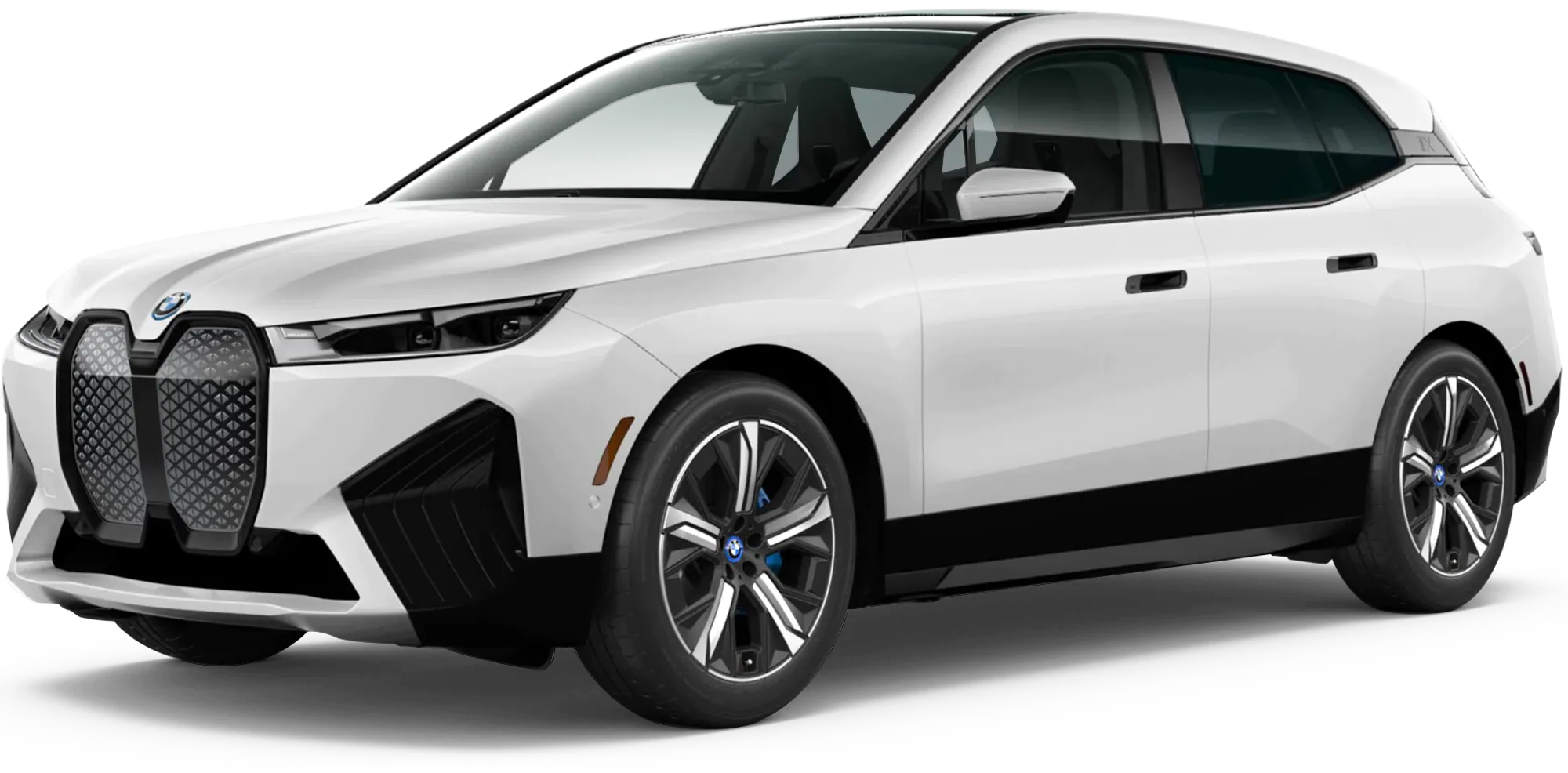
July 27, 2022 NHTSA CAMPAIGN NUMBER: 22V541000
High Voltage Battery May Short-Circuit
A short-circuit in a high voltage battery increases the risk of a fire.
NHTSA Campaign Number: 22V541
Manufacturer BMW of North America, LLC
Components ELECTRICAL SYSTEM
Potential Number of Units Affected 83
Summary
BMW of North America, LLC (BMW) is recalling certain 2022-2023 iX xDrive50, iX M60, 2022 i4 eDrive40, and i4 M50 vehicles. The high voltage battery may have internal damage, resulting in an electrical short-circuit.
Remedy
Owners are advised not to drive or charge their vehicles, and to park outside and away from structures until the remedy is complete. Dealers will replace the high voltage battery, free of charge. Interim owner notification letters, informing owners of the safety risk, were mailed September 23, 2022. A second letter will be mailed when remedy parts become available. Owner notification letters were mailed December 23, 2022. Owners may contact BMW customer service at 1-800-525-7417. Owners will also be contacted by phone.
Notes
Owners may also contact the National Highway Traffic Safety Administration Vehicle Safety Hotline at 1-888-327-4236 (TTY 1-800-424-9153), or go to www.nhtsa.gov.
Check if your BMW has a Recall
SIB 61 14 22
2023-04-12
RECALL 22V-541: HIGH-VOLTAGE BATTERY
This Service Information Bulletin (Revision 6) replaces SI B61 14 22 dated February, 2023.
What’s New:
- Procedure: High-voltage disclaimer wording updated
- Parts: Gen 5 HV Battery Cell Module Recall Return Process added
- Claim Info: Gen 5 HV Battery Condition Certification (BCC) supplemental RO/claim submission procedure for previously recalled/replaced HV cell modules added
| ☐ | THIS REPAIR IS MOBILE FRIENDLY |
MODEL
| E-Series | Model Description | Production Date |
| G26 BEV | i4 Gran Coupe | November 10, 2021 – October 21, 2022 |
AFFECTED VEHICLES
Vehicles which require this Recall Campaign to be completed will show it as “Open” when checked either in AIR, the “Service Menu” of DCSnet (Dealer Communication System), ISPA Next or Warranty Vehicle Inquiry.
BMW AG is conducting a Voluntary Safety Recall (effective July 21, 2022) on a small number of Model Year 2022 BMW i4 Gran Coupe vehicles that were produced between November 22, 2021, and June 13, 2022.
Affected vehicles are not to be driven or charged and to be parked away from any buildings.
SITUATION
During supplier production, the high-voltage battery may not have been produced to specifications. A short-circuit could occur which could lead to a thermal event. The affected high-voltage battery cell module will be replaced.
We will be turning VINs green “Remedy Available” based on parts availability. The BMW Customer Relations department will contact the appropriate dealer to have them place a Recall IDS ticket for the parts for a specific vehicle. Then Customer Relations will assist in scheduling an appointment based on the arrival of the parts. It is essential that the allotted IDS part goes to the assigned vehicle.
CAUSE
Some high-voltage battery modules may not have been produced to specifications.
CORRECTION
Removal and replacement of affected high-voltage cell modules.
PROCEDURE
Important Warning for Working on the High-Voltage (HV) systems on BMW Group vehicles:
Only properly trained personnel, who passed all applicable HV Technical Training Courses, should perform repairs which require disconnecting, or removal of High Voltage battery components on any Hybrid or Electric Vehicle. Work performed on High Voltage systems by unqualified persons may result in severe injury or damage to the vehicle. Additional safety information is found in Repair Instruction 61 00… “Observe safety instructions when handling electric vehicles”.
Prior to disconnecting, or the removal of any HV component, the HV system needs to be disabled and secured (by means of the HV Service Disconnect Switch and lock out) by a properly trained HV technician, who has a minimum HV Qualification level after completing the Technical Training Course “ST2324 High Voltage Drivetrain Systems” which as of 1/2023* includes ST1824 Alternative Drive Part 1.
* Note: As of January 2023, the HV component portion of the “ST2205 Generation 5 High-voltage class” (except for the High Voltage Battery) has been merged into “ST2324 High Voltage Drivetrain Systems”.
Up to Generation 4 Vehicles: Once the vehicle’s HV system is disabled (the “Blitz” – lightning bolt icon is displayed in instrument cluster, see below), a technician without HV Certification may remove a HV component (e.g., EH Heater, EKK Compressor, EME Control Unit, et.), except for the High Voltage Battery.
For Generation 5 Vehicles however, the specific vehicle training is required to diagnose, remove and service any HV component and it is NOT allowed for non HV certified technicians to work on the high voltage system.
High Voltage Battery removal and rework can ONLY be performed by a High-voltage Certified Technician with a HV Battery Certification level corresponding to a specific Electric or Hybrid vehicle, for example:
To repair GEN4 HV battery of G05 PHEV a certification from Technical Training Course “ST2006 – SP44 HV Battery” or equivalent ST1825 – Alternative Drive Part 2 is required (or as of 1/2023 the equivalent “ST 2325 for High Voltage Battery Systems”).
And
To repair A GEN5 HV battery the Technical Training Course “ST2205 Generation 5 High-voltage class” is required or as of 1/2023* the equivalent “ST 2325 for High Voltage Battery Systems”. BMW recommends NOT to drive the vehicle NOR charge the high-voltage battery until all repair work below to remedy the fault has been completed.
Caution:
Please create a TSARA case for ALL vehicles prior to any disassembly.
The steps below must be followed precisely:
- Please perform the cell module read out test plan in ISTA to determine the serial numbers and locations of the high-voltage cell modules installed in the vehicle.
Diagnostic path:
Vehicle management > Service function > Electric drive > High-voltage battery unit > High-voltage battery unit: Read out stored serial numbers ABL.
The “High-voltage battery unit: Read out stored serial numbers” test plan has been updated to identify the high-voltage cell modules affected by this campaign and their location in the high-voltage battery.
Note:
Once the Cell module read out test plan has been performed, please submit a TSARA case titled “Gen 5 HV Battery cell module ID process” for assistance in identifying the affected modules (attach the module serial number read out to the case).
It is imperative that once the new replacement cell module arrives, you attach that module serial number to the TSARA case for approval.
Only when TSARA approves the replacement module you have clearance to install it in the HV battery and continue the repair.
Please do not start the recall or submit a TSARA case if the status of the campaign is NOT Green, as there is not yet a “Remedy Available” for this vehicle.
- The high-voltage battery must be discharged prior to removal to an average cell voltage of 3.51V using the ISTA test plan below, before the high-voltage battery is opened and the defective modules are removed.
Diagnostic path:
Vehicle management > Service function > Electric drive > High-voltage battery unit > High-voltage battery unit discharged to a defined state of charge (SOC) ABL.
Note:
The High-voltage battery unit discharged to a defined state of charge (ABL) service function is ONLY available if the high-voltage battery temperature is between 15°C and 35°C (59 to 95 F).
- Replace the defective high-voltage cell modules using repair instructions 61 27 703 to 61 27 877 depending on the affected cell module location.
G26 BEV SE27 HB Battery module locations shown below-
PARTS INFORMATION
Only use and invoice the applicable part listed number below.
G26 BEV
| Part Number | Description | Quantity |
| 61 27 9454253 | Multi-purpose bolt (M12X1.5X45) | 14 |
| 61 25 8833851 | Hexagon bolt (M12x5x130) | 2 |
| 61 25 8833846 | Hexagon bolt (5×10⁵) | 6 |
| 07 14 6884435 | ASA Multi-purpose bolt (M10x35) | 4 |
| 33 32 6760340 | Torx bolt with washer (M12x127-10.9) | 4 |
| 33 30 6861221 | Torx bolt (ISA M12x35- 10.9) | 10 |
| 61 27 9884703 | Gasket | 1 |
| 07 14 8860492 | Screw (M5) | 82 |
| 07 14 8838288 | Sealing screw (M8x28) | 20 |
| 61 27 9454854 | Screw | as needed (max 63) |
| 61 27 8677639 | Screw (M6x18) | as needed (max. 22) |
| 39 10 6865725 | Multi-purpose bolt | 4 |
| 07 14 8835104 | Multi-purpose bolt (M12x1.5×72-10.9) | 4 |
| 07 14 6899140 | Cage nut (M12x1.5-10- ZNS3) | 4 |
| depending on the availability | ||
| 61 27 8847350 | Cell module, high-voltage battery | Up to 3 |
| 61 27 8847342 | Double module for high-voltage battery | Up to 4 |
| Or | ||
| 61 27 8847333 | Cell module, high-voltage battery | Up to 3 |
| 61 27 8847327 | Double module for high-voltage battery | Up to 4 |
SIB 61 15 22
2023-04-12
RECALL 22V-541: HIGH-VOLTAGE BATTERY
This Service Information Bulletin (Revision 7) replaces SI B61 15 22 dated November, 2022.
What’s New:
- Procedure: High-voltage disclaimer wording
- Parts: Gen 5 HV Battery Cell Module Recall Return Process added
- Claim Info: Gen 5 HV Battery Condition Certification (BCC) supplemental RO/claim submission procedure for previously recalled/replaced HV cell modules added
MODEL
| E-Series | Model Description | Production Date |
| I20 | iX Sports Activity Vehicle (SAV) | November 10, 2021 – October 21, 2022 |
AFFECTED VEHICLES
Vehicles which require this Recall Campaign to be completed will show it as “Open” when checked either in AIR, the “Service Menu” of DCSnet (Dealer Communication System), ISPA Next or Warranty Vehicle Inquiry.
BMW AG is conducting a Voluntary Safety Recall (effective July 21, 2022) on a small number of Model Year 2022 – 2023 BMW iX SAV vehicles that were produced between November 10, 2021 and October 21, 2022.
Affected vehicles are not to be driven or charged and to be parked away from any buildings.
SITUATION
During supplier production, the high-voltage battery may not have been produced to specifications. A short-circuit could occur which could lead to a thermal event. The affected high-voltage battery cell module will be replaced.
We will be turning VINs green “Remedy Available” based on parts availability. The BMW Customer Relations department will contact the appropriate dealer to have them place a Recall IDS ticket for the parts for a specific vehicle. Then Customer Relations will assist in scheduling an appointment based on the arrival of the parts. It is essential that the allotted IDS part goes to the assigned vehicle.
CAUSE
Some high-voltage battery modules may not have been produced to specifications.
CORRECTION
Removal and replacement of affected high-voltage cell modules.
PROCEDURE
Important Warning for Working on the High-Voltage (HV) systems on BMW Group vehicles:
Only properly trained personnel, who passed all applicable HV Technical Training Courses, should perform repairs which require disconnecting, or removal of High Voltage battery components on any Hybrid or Electric Vehicle. Work performed on High Voltage systems by unqualified persons may result in severe injury or damage to the vehicle. Additional safety information is found in Repair Instruction 61 00… “Observe safety instructions when handling electric vehicles”.
Additional Information:
Scheduled Maintenance, or Quality Certification 1 (Pre-Delivery Inspection) on Electric or Hybrid vehicles does not require HV technical training.
Prior to disconnecting, or the removal of any HV component, the HV system needs to be disabled and secured (by means of the HV Disconnect Switch) by a properly trained technician, who has a minimum HV Qualification level after completing the Technical Training Course ST1824 (Alternative Drive Part 1). Once the vehicle’s HV system is disabled (the “Blitz” – lightning bolt icon displayed in instrument cluster, see below), a technician without HV Certification may remove a HV component (e.g., EH Heater, EKK Compressor, EME Control Unit, et.), except for the High Voltage Battery.
High Voltage Battery removal and rework can be performed ONLY by a HV Specialist Technician (certified by the Technical Training Course ST1825 – Alternative Drive Part 2), AND with a HV Battery Certification level corresponding to a specific Electric or Hybrid vehicle (e.g., to repair GEN4 battery of G05 PHEV, certification from Technical Training Course “ST2006 – SP44 HV Battery” is required).
Therefore, to perform this SIB 61 15 22 a GEN5 battery Certification is required from Technical Training Course “ST2205 Generation 5 High-voltage” class).
BMW recommends NOT to drive the vehicle NOR charge the high-voltage battery until all repair work below to remedy the fault has been completed.
Caution:
Please create a TSARA case for all vehicles prior to any disassembly.
- Please perform the cell module read out test plan in ISTA to determine the serial numbers and locations of the high-voltage cell modules installed in the vehicle.
Diagnostic path:
Vehicle management > Service function > Electric drive > High-voltage battery unit > High-voltage battery unit: Read out stored serial numbers ABL.
The “High-voltage battery unit: Read out stored serial numbers” test plan has been updated to identify the high-voltage cell modules affected by this campaign and their location in the high-voltage battery.
Note:
Once the Cell module read out test plan has been performed, please submit a TSARA case titled “Gen 5 HV Battery cell module ID process” for assistance in identifying the affected modules (attach the module serial number read out to the case).
It is imperative that once the new replacement cell module arrives, you attach that module serial number to the TSARA case for approval.
Only when TSARA approves the replacement module you have clearance to install it in the HV battery and continue the repair.
Please do not start the recall or submit a TSARA case if the status of the campaign is NOT Green, as there is not yet a “Remedy Available” for this vehicle.
- The high-voltage battery must be discharged prior to removal to an average cell voltage of 3.51V using the ISTA test plan below, before the high-voltage battery is opened and the defective modules are removed.
Diagnostic path:
Vehicle management > Service function > Electric drive > High-voltage battery unit > High-voltage battery unit discharged to a defined state of charge (SOC) ABL.
Note:
The High-voltage battery unit discharged to a defined state of charge (ABL) service function is ONLY available if the high-voltage battery temperature is between 15°C and 35°C (59 to 95 F).
- Replace the defective high-voltage cell modules using repair instructions 61 27 703 to 61 27 877 depending on the affected cell module location.
I20 xDrive50/xDrive60 – SE10 HV Battery module locations shown below-
PARTS INFORMATION
Note: Please order the “as required” hardware based on the module you are replacing.
| Part Number | Description | Quantity |
| 07 14 9487466 | Screw (12×1.5×50 10.9) | 18 |
| 61 27 9487465 | Screw (12×1.5×100 10.9) | 10 |
| 31 11 6899302 | Multi-purpose bolt (10×45 ZNS3) | 14 |
| 61 27 9487464 | Screw | 8 |
| 51 16 1881149 | Expanding rivet | 6 |
| 61 27 9468425 | Screw | 94 |
| 07 14 8838288 | Sealing screw (M8x28) | Order as required |
| 61 27 9468423 | Housing seal | 1 |
| 61 27 9454855 | Screw | Order as required |
| 33 32 6775040 | Hex bolt with washer (M14x1.5×148) | 2 |
| 61 27 9893951 | Screw (M8GFX46-10.9) | Order as required |
| 61 27 9454854 | Screw | Order as required |
| 61 27 9893948 | ASA combination bolt (M8x84-10.9) | Order as required |
| Depending on the availability | ||
| 61 27 8846469 | Double cell module for high-voltage battery | Up to 5 |
| 61 27 8846470 | Double cell module for high-voltage battery | Up to 6 |
| Or: | ||
| 61 27 8838260 | Double cell module for high-voltage battery | Up to 5 |
| 61 27 8838259 | Double cell module for high-voltage battery | Up to 6 |
Safety Recall 22V-541
High-Voltage Battery
Model Year 2022-2023 BMW iX, i4
Issue Date: 10/04/2022
Q1. Which BMW Group models in the US are potentially affected by this Safety Recall?
A small number of Model Year 2022-2023 BMW iX and i4 models in the US, produced between November 2021 and June 2022, are potentially affected.
Q2. What is the specific issue?
The high-voltage battery manufacturer may not have produced the battery to specifications. As a result, a short-circuit could occur and lead to a thermal event.
Q3. Why are other models / vehicles not included in this Safety Recall?
Other models have been manufactured with a high-voltage battery that has been produced to specifications.
Q4. How did BMW Group become aware of the issue?
BMW Group became aware of the issue through our quality control procedures.
Q5. Can I continue to drive my vehicle?
No, please do not drive your vehicle until it is repaired.
Q6. Can I charge my vehicle?
No, please do not charge your vehicle until it is repaired.
Q7. Should I park my vehicle outside and away from structures?
Yes, please park your vehicle outside and away from structures.
Q8. How will I be informed of this Safety Recall?
Potentially affected customers are being contacted by phone and email, and arrangements are being made for the Safety Recall to be performed. Alternate transportation will be accommodated. You can locate your nearest authorized BMW center at www.bmwusa.com/dealer
To ensure BMW has the most up-to-date contact and vehicle information, owners should register their vehicle at www.bmwusa.com/myBMW. Registration is free and will give them access to other information specific for their BMW vehicle.
Q9. How and when will my vehicle be repaired?
The affected battery cell modules will be replaced. Owners will be notified again as soon as the remedy is available.
22V-541
Chronology
October 26, 2022
On April 16, 2022, BMW became aware of a non-US field incident involving a 2022 BMW i4 eDrive40. An engineering investigation was initiated, and the supplier was contacted.
A review of the battery supplier production records for the vehicle from the April incident was performed. Analyses suggested an irregularity during the supplier’s production process which may have allowed debris to enter into a battery cell. Further analyses were able to identify cathode pieces within the battery cell.
On June 3, 2022, BMW became aware of a US field incident involving a Model Year 2022 iX xDrive50, and on June 19, 2022, BMW became aware of a non-US field incident involving a 2022 BMW iX M60. Similar analyses were performed, and similar findings were identified involving an irregularity during the supplier’s production process.
Vehicle assembly information and supplier production and process records were reviewed to determine the number, and production dates, of potentially affected vehicles.
On July 20, 2022, BMW decided to conduct a voluntary safety recall.
BMW has not received any reports, nor is BMW otherwise aware, of any accidents or injuries related to this issue.
On July 29, 2022, BMW became aware of a field incident involving a Model Year 2022 i4 M50 company-owned vehicle.
Further analyses were performed by the supplier involving the battery cell production process. As a result of these analyses, and through parts tracing, additional vehicles were identified as having potentially suspect battery cells.
Accordingly, on August 26, 2022, these vehicles were added to the recall.
On August 4, 2022, a non-US field incident involving a 2022 BMW iX occurred. Reviews of supplier production records, and previous analyses of battery cell images, were not able to explain this incident. Therefore, additional engineering analyses were necessary.
During August, further in-depth analyses of supplier production records to identify other possible anomalies were performed and were identified. These findings were then used in combination with new/additional in-depth battery cell image analyses.
Between August and October, the analyses involved further pattern recognition processes of the battery cell images. As a result of these additional analyses, the August 4th incident was able to be identified as well as additional potentially suspect battery cells. Parts tracing was performed to identify potentially affected vehicles.
On October 19, 2022, BMW decided to add additional potentially affected vehicles to the voluntary safety recall.
3 Affected Products
Vehicles
23 Associated Documents
Recall Acknowledgement
RCAK-22V541-2017.pdf 697.913KB
Defect Notice 573 Report
RCLRPT-22V541-1655.PDF 215.456KB
Manufacturer Notices(to Dealers,etc) – Manufacturer notice to Dealers re BMW Recall 22V-xxx: High-Voltage Battery (Stop Drive/Stop Charge)
RCMN-22V541-5322.pdf 384.175KB
Manufacturer Notices(to Dealers,etc) – Dealer Notification re IX and I4 HV batteries blocked from dealer ordering
RCMN-22V541-3887.pdf 150.588KB
ISSUED Interim Owner Notification Letter(Part 577)
RIONL-22V541-7410.pdf 708.473KB
Recall 573 Report – 8/31/22
RCLRPT-22V541-6704.PDF 215.613KB
Remedy Instructions and TSB
RCRIT-22V541-9726.pdf 1992.754KB
Miscellaneous Document – Chronology
RMISC-22V541-9573.pdf 52.905KB
Remedy Instructions and TSB
RCRIT-22V541-8563.pdf 1098.331KB
Manufacturer Notices(to Dealers,etc) – Dealer Message re BMW Recall 22V-541: High-Voltage Battery – Update 10/26/2022
RCMN-22V541-1022.pdf 391.078KB
Remedy Instructions and TSB
RCRIT-22V541-2838.pdf 1081.594KB
Remedy Instructions and TSB
RCRIT-22V541-8729.pdf 977.136KB
Remedy Instructions and TSB
RCRIT-22V541-4371.pdf 1018.68KB
Remedy Instructions and TSB
RCRIT-22V541-4682.pdf 986.894KB
Remedy Instructions and TSB
RCRIT-22V541-5014.pdf 993.441KB
ISSUED Interim Owner Notification Letter(Part 577)
RIONL-22V541-6708.pdf 707.976KB
ISSUED Owner Notification Letter(Part 577)
RCONL-22V541-8636.pdf 675.063KB
Remedy Instructions and TSB
RCRIT-22V541-8297.pdf 996.147KB
Recall Quarterly Report #1, 2022-4
RCLQRT-22V541-6336.PDF 211.134KB
Remedy Instructions and TSB
RCRIT-22V541-9896.pdf 1003.139KB
Remedy Instructions and TSB
RCRIT-22V541-8176.pdf 1772.737KB
Remedy Instructions and TSB
RCRIT-22V541-5038.pdf 1788.309KB
Recall Quarterly Report #2, 2023-1
RCLQRT-22V541-5466.PDF 211.235KB
Latest Recalls Documents

- Flex Level 1 EV Charger - The EVDANCE Level 1 electric car charger is compatible with J1772 electric vehicles and plug-in hybrid vehicles (North American Standard). *Tesla requires a SAE J1772 adapter.
- Convenient to Use - This charger has both NEMA 6-20 plug for 16A 240V charging (3.68kW, 10-12 mi/h) and a NEMA 6-20 to 5-15 plug adapter for 12A 120V charging (1.44kW, 2-5 mi/h). The included bag makes it easier to carry on the go. It also has a 25ft cable length, you can use it flexibly from anywhere in the garage or driveway.
- Check Your Outlet Type -This charger works with standard 120V NEMA 5-15/5-20 outlets (2-5 mph charging speed) and 240V NEMA 6-20 outlets (10-12 mph) . It's not compatible with NEMA 6-15/10-30/14-30/14-50/6-50 outlets – you'll need a NEMA 14-50/14-30/10-30/6-50 to 6-20 adapter (sold separately) to connect.
- Compatible EV Models -This EV charger works with most major electric vehicles, including Ford, Chevrolet, Hyundai, Audi, Nissan Ariya, Rivian R1S, Kia, and others. However, it's not compatible with Mini Cooper Electric Hardtop,Toyota Prus Prime/Z4X/RAV4Prime, Porsche Taycan Base/4S/Turbo/Turbo S or Tesla models (Tesla requires a J1772 to Tesla Adapter, sold separately). For a full list of compatible models, check out the Full Compatibility List on our product page.
- Indication Displays - LED display that can tell you the status as well as indicate errors while charging your electric vehicle.

- WORKS WITH EVERY NON-TESLA EV: Standard J1772 connector plugs straight into Ford, Chevrolet, Hyundai, Kia, Nissan, BMW, Volkswagen, Audi, Rivian, Lucid and every other EV or plug-in hybrid sold with a J1772 port - no adapter needed. Tesla drivers can charge too, using the J1772 adapter that comes with the car. The extra-long 25 ft cable easily reaches across a garage or driveway.
- HARDWIRED - PROFESSIONAL INSTALL: This Level 2 charger is hardwired (not plug-in), so a licensed electrician installs it per National Electrical Code. It delivers up to 48A on a dedicated 60A, 240V circuit - enough to charge most EVs fully overnight. Want more speed? You can set DIP switches 4 and 5 to unlock 50A on a dedicated 70A circuit. Before ordering, check your car's port type and that your electrical panel can support the circuit.
- CONTROL FROM YOUR PHONE: A stronger built-in antenna keeps the charger online even in a garage or basement. Use the free app to start and stop charging, set the charging speed (6-48A), get reminders, and track how much energy and money each charge uses. Requires a 2.4 GHz home WiFi network.
- SAFETY-CERTIFIED & WEATHERPROOF: Independently tested and certified (UL, ETL, FCC, Energy Star). A fully sealed IP66 / NEMA 4 housing stands up to rain, snow, heat and dust indoors or out, and internal steel shielding protects the electronics for years of reliable use.
- GLOW-IN-THE-DARK HOLSTER: The included high-visibility holster glows in the dark so you can find and dock the plug easily at night. Holds the connector securely when not in use.

- Charge with Confidence: ChargePoint builds reliable, flexible EV charging stations for home, business, and fleets. Get 24/7 support and access to hundreds of thousands of North American charging locations.
- Charge Smart: With the user-friendly ChargePoint Mobile App, you can control your electric car charger, manage reminders, connect to smart home devices, find stations, get data and charging info, and access the latest features. Note: WiFi is needed for certain functionalities and troubleshooting steps if connectivity issues arise.
- Vast Network: Wherever you go, ChargePoint’s network includes 274k+ stations across North America and Europe and 565k+ roaming partner stations.
- Safe & Durable: Rely on this UL-certified EV charger for safe home charging. It can be installed indoors or outdoors by an electrician and includes a cold-resistant cable.
- Fast & Powerful: This EV charger charges 9× faster than a 120V outlet, delivering up to 45 mi/hr., dependent upon your vehicle. It features a J1772 connector for all non-Tesla EVs and requires a 20A or 80A circuit. For Tesla EVs, this will require an adapter.

- WORKS WITH EVERY NON-TESLA EV: Standard J1772 connector plugs straight into Ford, Chevrolet, Hyundai, Kia, Nissan, BMW, Volkswagen, Audi, Rivian, Lucid and every other EV or plug-in hybrid sold with a J1772 port - no adapter needed. Tesla drivers can charge too, using the J1772 adapter that comes with the car.
- PLUG IN, NO HARDWIRING: Level 2 charger delivers up to 40A to fully charge most EVs overnight. Plugs into a 240V, 4-prong NEMA 14-50 outlet (the RV/range type - NOT a dryer outlet) on a dedicated 50A circuit. The extra-long 25 ft cable easily reaches across a garage or driveway. Before ordering, check your car's port type and that you have the right outlet.
- CONTROL & SAVE FROM YOUR PHONE: A stronger built-in antenna keeps the charger online even in a garage or basement. Use the free app to start/stop charging, set speed (6-40A), get reminders, and track energy use and cost. Schedule off-peak overnight charging to cut your electric bill. Requires 2.4 GHz WiFi.
- SAFETY-CERTIFIED & WEATHERPROOF: Independently tested and certified (UL, ETL, FCC, Energy Star). A fully sealed IP66 / NEMA 4 housing stands up to rain, snow, heat and dust indoors or out, and internal steel shielding protects the electronics for years of reliable use.
- GLOW-IN-THE-DARK HOLSTER: The included high-visibility holster glows in the dark so you can find and dock the plug easily at night. Holds the connector securely when not in use.

- [Up to 9x Faster Charging Speed]: Provides up to 46 miles/hour charging speed via hardwired connection (48 amp - up to 9x faster than a standard wall outlet) or up to 38 miles/hour via the NEMA 14-50 plug (40 amp). Professional installation recommended for optimal safety and performance. [Install The Power Outlet Cord]: No smaller than 8AWG if charge 40-48A, we suggest 6AWG cord.(1.The input side is belongs to the electrician electric automobile regulation scope, need to use three 6AWG cable wires for 48A; 2.The charging cable belongs to the automotive connector certification standard, so the 8AWG cable can meet the 48A.)
- [DESIGNED WITH J1772 Connector for All North America j1772 Connector EVs/PHEVs. Not fits for Tesla/Nacs Connector Cars(j1772 to Tesla adapter needed)]: Compatible with Tesla cars (Adapter needed, not included), Ford, GM, Audi, Kia, Honda, Kia, Hyundai, Gmc, Chevrolet Bolt, VW ID 4, Nissan Leaf, Ford Mustang Mach-E, IONIQ 5 2024 and before, BMW i3, i4, iX, Jeep Wrangler 4xe, etc. [Not fits for Nac connector cars-Kia EV6 2025/EV9,Ariya 2025&2025 loniq 5(J1772 to Tesla adapter needed)]
- [Safety & Faster Charging with ETL, FCC, Energy Star Certified]: Meets the Safety Criteria Defined by: SAE J1772, UL2231-1/-2, UL 991, UL 2231, UL 2251, UL1998 and UL 2594. (ETL and FCC certified EV car charger with 3-year Warranty)
- [Plug-play Mode(The Default Setting), Smart Touch Screen, No APP Needed]: Clearly show the charging amperage, charging speed, input voltage, delay time, etc. For the touch buttons: 1. Pull out the charging gun before press the buttons, otherwise no respond; 2. Long press "Ⓐ" or "Time" button to enter the setting interface, then you can adjust the amperage from 16A to 48A freely or Set the charging start time; 3. You can do "factory reset" if doesn't charging.
- [Smart WIFI APP, You can Set the Charging Period]: By APP, you can wirelessly check the charging cost, history, fully-charged notification, track the charging status, during off-peak period, etc. [Wi-Fi Reset/Factory Reset Function, Add New Device Quickly]: If you can't find your device or you have replaced a new phone, just pull out the charging latches, simultaneously long press the Ⓐ button and time adjustment button on the product screen until it shows "Factory Reset", then wait 3-5 seconds and re-start your device.

SEOCONTENT-START
SAMPLE Company BMW of North America, LLC BMW Group Company Mailing Address PO Box 1227 Westwood NJ 07675- 1227 Telephone (855) 269-3361 Fax (201) 930-8362 E-mail CustomerRelations@ bmwusa.com Internet bmwusa.com BMW IMPORTANT SAFETY RECALL This notice applies to your vehicle, Recall Campaign No. 22V-541 High-Voltage Battery September 2022 Dear BMW Owner / Lessee: This notice is sent to you in accordance with the National Traffic and Motor Vehicle Safety Act. BMW AG has decided that a defect, which relates to motor vehicle safety, exists in certain Model Year 2022-2023 BMW i4 and iX vehicles. Our records indicate that you are the owner of a potentially affected vehicle. Why are we contacting you? We are informing you of a safety recall on your vehicle although we are not able to perform the remedy at this time. We will notify you with a follow-up letter as soon as we are able to perform this safety recall. If you are not the only driver of this vehicle, please advise all other drivers and passengers of this important information. What could happen? The high voltage battery may have internal damage, resulting in an electrical short-circuit , increasing the risk of a fire. Until the vehicle is remedied, do not charge the high-voltage battery or drive the vehicle. In addition, park the vehicle outside and away from structures. In August, BMW contacted you by phone and email, and provided you with alternate transportation, in addition to informing you that your local BMW center will pick up and drop off your vehicle when the remedy becomes available. If you do not heed the overall warnings above, and continue to drive the vehicle, then if the issue were to occur while driving, a warning message for HV Battery/Drivetrain malfunction may display and the vehicle may go into failsafe mode. If you notice an unpleasant odor, or see smoke from the vehicle, carefully move away from traffic as soon as possible, pull over to a safe location, and shut off the power. Do not continue to drive the vehicle. All occupants should exit the vehicle and move to a safe location away from traffic. Dial 911 in the event of an emergency. If it is not an emergency, contact BMW Roadside Assistance at 1-800-332-4269. What will BMW do? When the remedy is available, potentially affected high-voltage battery cells will be replaced for free. We will contact you with a follow-up letter when the remedy is available. What if I am not the current owner of this vehicle? If you changed your address or sold the vehicle, you can let us know by visiting www.bmwusa.com/mybmw or by contacting BMW Customer Relations (see left side of page for contact info). If you are a vehicle lessor, Federal Regulations require you to forward this notice to your lessee within ten days. What if I have additional questions? For the latest updates to this recall, please visit www.bmwusa.com/recall. Should you have any questions about this recall, please contact your authorized BMW center. If you need additional assistance, please contact BMW Customer Relations. If your BMW center is unable to remedy the defect without charge or within a reasonable period of time, you may notify the Administrator, National Highway Traffic Safety Administration, 1200 New Jersey Ave., S.E., Washington, DC 20590, call the toll-free Vehicle Safety Hotline at 1-888-327-4236 (TTY: 1-800-424-9153), or go to http://www.safercar.gov. Please be assured that your safety is important to us, and we sincerely apologize if this recall causes any inconvenience. We recommend that you and your passengers wear your safety belt at all times. Sincerely, BMW of North America, LLC Spanish translation on back side Traducción en español en el lado inverso Remedy is Unavailable 1 September 2022 SAMPLE Empresa BMW of North America, LLC BMW Group Company Dirección de correo postal PO Box 1227 Westwood NJ 07675- 1227 Teléfono (855) 269-3361 Fax (201) 930-8362 Correo electrónico CustomerRelations@ bmwusa.com Sitio web bmwusa.com BMW IMPORTANTE RETIRADA POR MOTIVOS DE SEGURIDAD Este aviso se aplica a su vehículo, Campaña de retirada n.º 22V-541: Batería de alto voltaje Septiembre de 2022 Estimado propietario o arrendatario de un vehículo BMW: Le enviamos este aviso de conformidad con la Ley Nacional de Tránsito y Seguridad de los Vehículos Motorizados (National Traffic and Motor Vehicle Safety Act). BMW AG ha determinado que algunos vehículos de los modelos i4 e iX de BMW, de los años 2022 y 2023, tienen un defecto relacionado con la seguridad de los vehículos motorizados. Nuestros registros indican que usted es el propietario de un vehículo posiblemente afectado. ¿Por qué nos comunicamos con usted? Le informamos sobre una retirada de su vehículo por motivos de seguridad, aunque no podemos brindarle una solución al problema en este momento. Le enviaremos otra carta de notificación en cuanto podamos realizar esta retirada por motivos de seguridad. Si usted no es la única persona que conduce este vehículo, comparta esta información importante con todos los demás conductores y pasajeros. ¿Qué podría suceder? La batería de alto voltaje puede presentar daños internos que provoquen un cortocircuito eléctrico, lo que aumenta el riesgo de incendio. Hasta que se repare el vehículo, no cargue la batería de alto voltaje ni conduzca el vehículo. Además, estacione el vehículo en exteriores y lejos de estructuras. En agosto, BMW se puso en contacto con usted por teléfono y correo electrónico y le proporcionó un transporte alternativo, además de informarle que su centro local de BMW recogerá y dejará su vehículo cuando la solución esté disponible. Si no tiene en cuenta las advertencias generales anteriores y sigue conduciendo el vehículo, es decir, si el problema sucediera mientras conduce, es posible que aparezca un mensaje de advertencia en la pantalla que indique el mal funcionamiento de la batería de alto voltaje o del tren de potencia (HV Battery/Drivetrain malfunction), y que el modo del vehículo se cambie a “mecanismo de seguridad” (failsafe mode). Si siente un olor desagradable o ve humo saliendo del vehículo, aléjese con cuidado del tráfico lo antes posible, deténgase en un lugar seguro y corte el suministro. No siga conduciendo el vehículo. Todos los ocupantes deben salir del vehículo y dirigirse a un lugar seguro lejos del tráfico. En caso de emergencia, llame al 911. Si no es una emergencia, llame a Asistencia en la carretera de BMW (BMW Roadside Assistance) al 1-800-332-4269. ¿Qué hará BMW? Cuando el repuesto esté disponible, se reemplazarán de manera gratuita las celdas de la batería de alto voltaje que puedan estar afectadas. En cuanto el repuesto esté disponible, le informaremos en una carta de seguimiento. ¿Qué ocurre si no soy el propietario actual de este vehículo? Si usted cambió su dirección o vendió el vehículo, nos puede avisar visitando el sitio web www.bmwusa.com/mybmw o comunicándose con el Servicio de Atención al Cliente de BMW (BMW Customer Relations) (consulte la información de contacto en el lado izquierdo de la página). Si usted es arrendador de vehículos, las reglamentaciones federales exigen que reenvíe este aviso a su arrendatario en un plazo de diez días. ¿Qué debo hacer si tengo más preguntas? Para ver las últimas actualizaciones sobre esta retirada, visite el sitio web www.bmwusa.com/recall. Si tiene alguna pregunta sobre esta retirada, comuníquese con el centro autorizado de BMW. Si necesita más ayuda, comuníquese con el Servicio de Atención al Cliente de BMW. Si el centro de BMW no puede resolver el defecto sin cargo o en un plazo razonable, usted puede notificar al administrador de la Administración Nacional de Seguridad de Tránsito en Carreteras (National Highway Traffic Safety Administration), en 1200 New Jersey Ave., S.E., Washington, DC 20590, llamar a la Línea gratuita directa de seguridad vehicular (Vehicle Safety Hotline) al 1-888-327-4236 (TTY: 1-800-424-9153) o visitar el sitio web http://www.safercar.gov. Le aseguramos que nos importa su seguridad y le pedimos sinceras disculpas si esta retirada le causa algún inconveniente. Recomendamos que usted y sus pasajeros usen el cinturón de seguridad en todo momento. Atentamente. BMW of North America, LLC La solución al problema no está disponible English translation on front side Traducción en inglés en el frente 1
**************************************************************************************************************
SAMPLE Company BMW of North America, LLC BMW Group Company Mailing Address PO Box 1227 Westwood NJ 07675- 1227 Telephone (855) 269-3361 Fax (201) 930-8362 E-mail CustomerRelations@ bmwusa.com Internet bmwusa.com December 2022 Dear BMW Owner / Lessee: This notice is sent to you in accordance with the National Traffic and Motor Vehicle Safety Act. BMW AG has decided that a defect, which relates to motor vehicle safety, exists in certain Model Year 2022-2023 BMW i4 and iX vehicles. Our records indicate that you are the owner of a potentially affected vehicle. Why are we contacting you? We are informing you of a safety recall on your vehicle although we are not able to perform the remedy at this time. We will notify you with a follow-up letter as soon as we are able to perform this safety recall. If you are not the only driver of this vehicle, please advise all other drivers and passengers of this important information. What could happen? The high voltage battery may have internal damage, resulting in an electrical short-circuit , increasing the risk of a fire. Until the vehicle is remedied, do not charge the high-voltage battery or drive the vehicle. In addition, park the vehicle outside and away from structures. In August, BMW contacted you by phone and email, and provided you with alternate transportation, in addition to informing you that your local BMW center will pick up and drop off your vehicle when the remedy becomes available. If you do not heed the overall warnings above, and continue to drive the vehicle, then if the issue were to occur while driving, a warning message for HV Battery/Drivetrain malfunction may display and the vehicle may go into failsafe mode. If you notice an unpleasant odor, or see smoke from the vehicle, carefully move away from traffic as soon as possible, pull over to a safe location, and shut off the power. Do not continue to drive the vehicle. All occupants should exit the vehicle and move to a safe location away from traffic. Dial 911 in the event of an emergency. If it is not an emergency, contact BMW Roadside Assistance at 1-800-332-4269. What will BMW do? When the remedy is available, potentially affected high-voltage battery cells will be replaced for free. We will contact you with a follow-up letter when the remedy is available. What if I am not the current owner of this vehicle? If you changed your address or sold the vehicle, you can let us know by visiting www.bmwusa.com/mybmw or by contacting BMW Customer Relations (see left side of page for contact info). If you are a vehicle lessor, Federal Regulations require you to forward this notice to your lessee within ten days. What if I have additional questions? For the latest updates to this recall, please visit www.bmwusa.com/recall. Should you have any questions about this recall, please contact your authorized BMW center. If you need additional assistance, please contact BMW Customer Relations. If your BMW center is unable to remedy the defect without charge or within a reasonable period of time, you may notify the Administrator, National Highway Traffic Safety Administration, 1200 New Jersey Ave., S.E., Washington, DC 20590, call the toll-free Vehicle Safety Hotline at 1-888-327-4236 (TTY: 1-800-424-9153), or go to http://www.safercar.gov. Please be assured that your safety is important to us, and we sincerely apologize if this recall causes any inconvenience. We recommend that you and your passengers wear your safety belt at all times. Sincerely, BMW of North America, LLC Spanish translation on back side Traducción en español en el lado inverso Remedy is Unavailable 1 BMW IMPORTANT SAFETY RECALL This notice applies to your vehicle, Recall Campaign No. 22V-541 High-Voltage Battery December 2022 SAMPLE Empresa BMW of North America, LLC BMW Group Company Dirección de correo postal PO Box 1227 Westwood NJ 07675- 1227 Teléfono (855) 269-3361 Fax (201) 930-8362 Correo electrónico CustomerRelations@ bmwusa.com Sitio web bmwusa.com BMW IMPORTANTE RETIRADA POR MOTIVOS DE SEGURIDAD Este aviso se aplica a su vehículo, Campaña de retirada n.º 22V-541: Batería de alto voltaje Diciembre de 2022 Estimado propietario o arrendatario de un vehículo BMW: Le enviamos este aviso de conformidad con la Ley Nacional de Tránsito y Seguridad de los Vehículos Motorizados (National Traffic and Motor Vehicle Safety Act). BMW AG ha determinado que algunos vehículos de los modelos i4 e iX de BMW, de los años 2022 y 2023, tienen un defecto relacionado con la seguridad de los vehículos motorizados. Nuestros registros indican que usted es el propietario de un vehículo posiblemente afectado. ¿Por qué nos comunicamos con usted? Le informamos sobre una retirada de su vehículo por motivos de seguridad, aunque no podemos brindarle una solución al problema en este momento. Le enviaremos otra carta de notificación en cuanto podamos realizar esta retirada por motivos de seguridad. Si usted no es la única persona que conduce este vehículo, comparta esta información importante con todos los demás conductores y pasajeros. ¿Qué podría suceder? La batería de alto voltaje puede presentar daños internos que provoquen un cortocircuito eléctrico, lo que aumenta el riesgo de incendio. Hasta que se repare el vehículo, no cargue la batería de alto voltaje ni conduzca el vehículo. Además, estacione el vehículo en exteriores y lejos de estructuras. En agosto, BMW se puso en contacto con usted por teléfono y correo electrónico y le proporcionó un transporte alternativo, además de informarle que su centro local de BMW recogerá y dejará su vehículo cuando la solución esté disponible. Si no tiene en cuenta las advertencias generales anteriores y sigue conduciendo el vehículo, es decir, si el problema sucediera mientras conduce, es posible que aparezca un mensaje de advertencia en la pantalla que indique el mal funcionamiento de la batería de alto voltaje o del tren de potencia (HV Battery/Drivetrain malfunction), y que el modo del vehículo se cambie a “mecanismo de seguridad” (failsafe mode). Si siente un olor desagradable o ve humo saliendo del vehículo, aléjese con cuidado del tráfico lo antes posible, deténgase en un lugar seguro y corte el suministro. No siga conduciendo el vehículo. Todos los ocupantes deben salir del vehículo y dirigirse a un lugar seguro lejos del tráfico. En caso de emergencia, llame al 911. Si no es una emergencia, llame a Asistencia en la carretera de BMW (BMW Roadside Assistance) al 1-800-332-4269. ¿Qué hará BMW? Cuando el repuesto esté disponible, se reemplazarán de manera gratuita las celdas de la batería de alto voltaje que puedan estar afectadas. En cuanto el repuesto esté disponible, le informaremos en una carta de seguimiento. ¿Qué ocurre si no soy el propietario actual de este vehículo? Si usted cambió su dirección o vendió el vehículo, nos puede avisar visitando el sitio web www.bmwusa.com/mybmw o comunicándose con el Servicio de Atención al Cliente de BMW (BMW Customer Relations) (consulte la información de contacto en el lado izquierdo de la página). Si usted es arrendador de vehículos, las reglamentaciones federales exigen que reenvíe este aviso a su arrendatario en un plazo de diez días. ¿Qué debo hacer si tengo más preguntas? Para ver las últimas actualizaciones sobre esta retirada, visite el sitio web www.bmwusa.com/recall. Si tiene alguna pregunta sobre esta retirada, comuníquese con el centro autorizado de BMW. Si necesita más ayuda, comuníquese con el Servicio de Atención al Cliente de BMW. Si el centro de BMW no puede resolver el defecto sin cargo o en un plazo razonable, usted puede notificar al administrador de la Administración Nacional de Seguridad de Tránsito en Carreteras (National Highway Traffic Safety Administration), en 1200 New Jersey Ave., S.E., Washington, DC 20590, llamar a la Línea gratuita directa de seguridad vehicular (Vehicle Safety Hotline) al 1-888-327-4236 (TTY: 1-800-424-9153) o visitar el sitio web http://www.safercar.gov. Le aseguramos que nos importa su seguridad y le pedimos sinceras disculpas si esta retirada le causa algún inconveniente. Recomendamos que usted y sus pasajeros usen el cinturón de seguridad en todo momento. Atentamente. BMW of North America, LLC La solución al problema no está disponible English translation on front side Traducción en inglés en el frente
**************************************************************************************************************
4/17/23, 3:39 PM 61 14 22_RECALL 22V-541: HIGH-VOLTAGE BATTERY about:blank 1/10 SIB 61 14 22 RECALL 22V-541: HIGH-VOLTAGE BATTERY 2023-04-12 This Service Information Bulletin (Revision 6) replaces SI B61 14 22 dated February, 2023. What’s New: Procedure: High-voltage disclaimer wording updated Parts: Gen 5 HV Battery Cell Module Recall Return Process added Claim Info: Gen 5 HV Battery Condition Certification (BCC) supplemental RO/claim submission procedure for previously recalled/replaced HV cell modules added ☐ THIS REPAIR IS MOBILE FRIENDLY MODEL E-Series Model Description Production Date G26 BEV i4 Gran Coupe November 10, 2021 – October 21, 2022 AFFECTED VEHICLES Vehicles which require this Recall Campaign to be completed will show it as “Open” when checked either in AIR, the “Service Menu” of DCSnet (Dealer Communication System), ISPA Next or Warranty Vehicle Inquiry. BMW AG is conducting a Voluntary Safety Recall (effective July 21, 2022) on a small number of Model Year 2022 BMW i4 Gran Coupe vehicles that were produced between November 22, 2021, and June 13, 2022. Affected vehicles are not to be driven or charged and to be parked away from any buildings. SITUATION During supplier production, the high-voltage battery may not have been produced to specifications. A short-circuit could occur which could lead to a thermal event. The affected high-voltage battery cell module will be replaced. We will be turning VINs green “Remedy Available” based on parts availability. The BMW Customer Relations department will contact the appropriate dealer to have them place a Recall IDS ticket for the parts for a specific vehicle. Then Customer Relations will assist in scheduling an appointment based on the arrival of the parts. It is essential that the allotted IDS part goes to the assigned vehicle. CAUSE Some high-voltage battery modules may not have been produced to specifications. CORRECTION Removal and replacement of affected high-voltage cell modules. PROCEDURE Important Warning for Working on the High-Voltage (HV) systems on BMW Group vehicles: Only properly trained personnel, who passed all applicable HV Technical Training Courses, should perform repairs which require disconnecting, or removal of High Voltage battery components on any Hybrid or Electric Vehicle. Work performed on High Voltage systems by unqualified persons may result in severe injury or damage to the vehicle. Additional safety information is found in Repair Instruction 61 00… “Observe safety instructions when handling electric vehicles”. Copyright ©2023 BMW of North America, Inc. 4/17/23, 3:39 PM 61 14 22_RECALL 22V-541: HIGH-VOLTAGE BATTERY about:blank 2/10 Prior to disconnecting, or the removal of any HV component, the HV system needs to be disabled and secured (by means of the HV Service Disconnect Switch and lock out) by a properly trained HV technician, who has a minimum HV Qualification level after completing the Technical Training Course “ST2324 High Voltage Drivetrain Systems” which as of 1/2023* includes ST1824 Alternative Drive Part 1. * Note: As of January 2023, the HV component portion of the “ST2205 Generation 5 High-voltage class” (except for the High Voltage Battery) has been merged into “ST2324 High Voltage Drivetrain Systems”. Up to Generation 4 Vehicles: Once the vehicle’s HV system is disabled (the “Blitz” – lightning bolt icon is displayed in instrument cluster, see below), a technician without HV Certification may remove a HV component (e.g., EH Heater, EKK Compressor, EME Control Unit, et.), except for the High Voltage Battery. For Generation 5 Vehicles however, the specific vehicle training is required to diagnose, remove and service any HV component and it is NOT allowed for non HV certified technicians to work on the high voltage system. High Voltage Battery removal and rework can ONLY be performed by a High-voltage Certified Technician with a HV Battery Certification level corresponding to a specific Electric or Hybrid vehicle, for example: To repair GEN4 HV battery of G05 PHEV a certification from Technical Training Course “ST2006 – SP44 HV Battery” or equivalent ST1825 – Alternative Drive Part 2 is required (or as of 1/2023 the equivalent “ST 2325 for High Voltage Battery Systems”). And To repair A GEN5 HV battery the Technical Training Course “ST2205 Generation 5 High-voltage class” is required or as of 1/2023* the equivalent “ST 2325 for High Voltage Battery Systems”. BMW recommends NOT to drive the vehicle NOR charge the high-voltage battery until all repair work below to remedy the fault has been completed. Caution: Please create a TSARA case for ALL vehicles prior to any disassembly. The steps below must be followed precisely: 1. Please perform the cell module read out test plan in ISTA to determine the serial numbers and locations of the high-voltage cell modules installed in the vehicle. Diagnostic path: Vehicle management > Service function > Electric drive > High-voltage battery unit > High-voltage battery unit: Read out stored serial numbers ABL. The “High-voltage battery unit: Read out stored serial numbers” test plan has been updated to identify the high-voltage cell modules affected by this campaign and their location in the high-voltage battery. Note: Copyright ©2023 BMW of North America, Inc. 4/17/23, 3:39 PM 61 14 22_RECALL 22V-541: HIGH-VOLTAGE BATTERY about:blank 3/10 Once the Cell module read out test plan has been performed, please submit a TSARA case titled “Gen 5 HV Battery cell module ID process” for assistance in identifying the affected modules (attach the module serial number read out to the case). It is imperative that once the new replacement cell module arrives, you attach that module serial number to the TSARA case for approval. Only when TSARA approves the replacement module you have clearance to install it in the HV battery and continue the repair. Please do not start the recall or submit a TSARA case if the status of the campaign is NOT Green, as there is not yet a “Remedy Available” for this vehicle. 2. The high-voltage battery must be discharged prior to removal to an average cell voltage of 3.51V using the ISTA test plan below, before the high-voltage battery is opened and the defective modules are removed. Diagnostic path: Vehicle management > Service function > Electric drive > High-voltage battery unit > High-voltage battery unit discharged to a defined state of charge (SOC) ABL. Note: The High-voltage battery unit discharged to a defined state of charge (ABL) service function is ONLY available if the high-voltage battery temperature is between 15°C and 35°C (59 to 95 F). 3. Replace the defective high-voltage cell modules using repair instructions 61 27 703 to 61 27 877 depending on the affected cell module location. G26 BEV SE27 HB Battery module locations shown below- PARTS INFORMATION Only use and invoice the applicable part listed number below. G26 BEV Copyright ©2023 BMW of North America, Inc. 4/17/23, 3:39 PM 61 14 22_RECALL 22V-541: HIGH-VOLTAGE BATTERY about:blank 4/10 Part Number Description Quantity 61 27 9454253 Multi-purpose bolt (M12X1.5X45) 14 61 25 8833851 Hexagon bolt (M12x5x130) 2 61 25 8833846 Hexagon bolt (5×10⁵) 6 07 14 6884435 ASA Multi-purpose bolt (M10x35) 4 33 32 6760340 Torx bolt with washer (M12x127-10.9) 4 33 30 6861221 Torx bolt (ISA M12x35- 10.9) 10 61 27 9884703 Gasket 1 07 14 8860492 Screw (M5) 82 07 14 8838288 Sealing screw (M8x28) 20 61 27 9454854 Screw as needed (max 63) 61 27 8677639 Screw (M6x18) as needed (max. 22) 39 10 6865725 Multi-purpose bolt 4 07 14 8835104 Multi-purpose bolt (M12x1.5×72-10.9) 4 07 14 6899140 Cage nut (M12x1.5-10- ZNS3) 4 depending on the availability 61 27 8847350 Cell module, high-voltage battery Up to 3 61 27 8847342 Double module for high-voltage battery Up to 4 Or 61 27 8847333 Cell module, high-voltage battery Up to 3 61 27 8847327 Double module for high-voltage battery Up to 4 Recalled Part Retention Recalled parts that are removed from BMW vehicles cannot be used for resale! The recalled parts are the property of BMW NA. Your center is responsible for the proper identification, storage and documentation of these parts. They must be held in a secure retention area until notification of claim payment is made by BMW NA through DCSnet. Please DO NOT return these recalled High Voltage (HV) battery modules directly to the WPRC. You must use the Gen 5 HV battery recall return process. Please refer to the following document for the procedure that applies to returning these Recalled HV Battery Modules: Note: The Gen 5 high-voltage cell module recall return process is different from Gen 4 The new process has been finalized as of SIB Revision 7 and is now available See attachments below. For the Gen 5 battery cell module recall return process, refer to: Bulletin #: C-2-0323-0606 Gen 5 HV Battery Recall Return Process.pdf For more information refer to CenterNet: “Menu>BMW>Aftersales>Business Development & Marketing Portal>Batteries>Bulletins”. See the One-Time Gen 5 Battery Condition Certification (BCC) supplemental RO/Claim submission procedure below for previously recalled replaced/pending return HV Cell Modules. CLAIM INFORMATION Copyright ©2023 BMW of North America, Inc. 4/17/23, 3:39 PM 61 14 22_RECALL 22V-541: HIGH-VOLTAGE BATTERY about:blank 5/10 Reimbursement for this Recall will be via normal claim entry utilizing the relevant work package, the additional work labor operation for the applicable FRU allowance and the part numbers listed above that apply. Plus work (+) The vehicle is already in the workshop Main work The vehicle arrives for this Recall, no other Main work will be performed/ claimed during this workshop visit Defect Code: 0061970600 G26 BEV Replacing high-voltage battery cell module A. Refer to the below for the corresponding flat rate unit (FRU) allowances. Work Pkg Labor Operation Description Labor Allowance #1 00 72 880 Removing and installing high-voltage battery unit, and removing/installing lid for high-voltage battery unit (Includes 61 27 900 – High-voltage battery unit final test, draining and topping up the coolant circuit) (Plus work) 109 FRU Or: #2 00 72 299 Removing and installing high-voltage battery unit and removing/installing lid for high-voltage battery unit (Includes 61 27 900 – High-voltage battery unit final test, draining and topping up the coolant circuit) (Main work) 111 FRU Only one of the flat rate labor operation codes listed above can be used for claim submission and reimbursement. Also, only one Main work flat rate labor operation code can be claimed per workshop visit. B. 00 72 300: Additional Work with Labor Operation 00 72 880 (WP 1) or 00 72 299 (WP 2) Note: Claim labor operation 00 72 300 one-time only for the applicable total FRU allowance that applies. Itemize the total work time (WT) FRU allowanced claimed on the RO and in the claim comments. Work time labor operation code 00 72 300 is not considered a Main labor operation. Labor Operation Labor Description Labor Allowance 00 72 300 Only when the test module “High-voltage battery unit: Read out stored serial numbers” is not available: Please submit a TSARA case titled “Gen 5 HV Battery cell module ID process” for assistance. Perform a Vehicle Test (Includes 00 00 556/61 21 528) and run the HV battery discharge procedure 6 FRU Then, after the test module becomes available Labor Operation Labor Description Labor Allowance 00 72 300 Perform the cell module read out test plan in ISTA to determine the serial numbers and locations of the highvoltage cell modules affected by this Recall (Includes 00 00 556/61 21 528) and run the HV battery discharge procedure 6 FRU Copyright ©2023 BMW of North America, Inc. 4/17/23, 3:39 PM 61 14 22_RECALL 22V-541: HIGH-VOLTAGE BATTERY about:blank 6/10 Note: The following HV cell module replacement procedure includes completing and attaching the required Battery Condition Certification form to each replaced HV cell module. And, as instructed above, and as applicable with the repair below that applies: C. 00 72 300 – Replacing Single Cell Modules 6 or/and 7 Labor Description Labor Allowance Replacing cell module 6 14 FRU Or/and: Replacing cell module 7 14 FRU Total 28 FRU Or: D. 00 72 300 – Prework for Cell Module Access (1, 2/11, 3/10, 4/9, 5/8) Labor Description Labor Allowance Remove and install intermediate level (For access to cell module 1, minus 61 27 010/501 and 61 27 900 that is included in 00 72 299/00 72 800) 11 FRU And” E. 00 72 300 – Replacing Single Cell Module 1 Labor Description Labor Allowance Replacing cell module 1 12 FRU Total with D 23 FRU Or: F. 00 72 300 – Replacing Single Cell Modules (6 and/or 7 and 1) Labor Description Labor Allowance C (14 FRU), D and E for 2 cell modules (6 or 7 and 1) 37 FRU C (28 FRU), D and E for 3 cell modules (6 and 7 and 1) 51 FRU Or: G. 00 72 300 – Replacing Dual-Cell Modules 2/11, 3/10, 4/9, 5/8 (Includes cell modules 6 and 7) Only One (1) Dual-Cell Module (with E when applicable) Labor Description Labor Allowance with D (Plus 11 FRU is included below) With Cell Module 1 (E) Replacing dual-cell module 2 (Includes cell 11) 26 FRU 38 FRU Or: Replacing dual-cell module 3 (Includes cell 10) 24 FRU 36 FRU Or: Replacing dual-cell module 4 (CInocpluydriegsh tc e©ll2 90)23 BM2W4 FoRf UNorth America, In3c6. FRU 4/17/23, 3:39 PM 61 14 22_RECALL 22V-541: HIGH-VOLTAGE BATTERY about:blank 7/10 Or: Replacing dual-cell module 5 (Includes cell 8) 22 FRU 34 FRU Or: H. Only Two (2) Dual-Cell Modules (with E when applicable) Dual-cell modules 2/3 (2) 2/4 (2) 2/5 (2) 3/4 (2) 3/5 (2) 4/5 (2) Pre-work (D) 11 FRU 11 FRU 11 FRU 11 FRU 11 FRU 11 FRU 2 (Includes cell 11) 15 FRU 15 FRU 15 FRU 3 (Includes cell 10) 13 FRU 13 FRU 13 FRU 4 (Includes cell 9) 13 FRU 13 FRU 13 FRU 5 (Includes cell 8) 11 FRU 11 FRU 11 FRU Totals 39 FRU 39 FRU 37 FRU 37 FRU 35 FRU 35 FRU Cell module 1 (E) 12 FRU 12 FRU 12 FRU 12 FRU 12 FRU 12 FRU Totals 51 FRU 51 FRU 49 FRU 49 FRU 47 FRU 47 FRU Or: I. Only Three (3) Dual-Cell Modules (with E when applicable) Dual-cell modules (C) 2/3/4 (3) 2/3/5 (3) 3/4/5 (3) 2/4/5 (3) All (4) Pre-work (D) 11 FRU 11 FRU 11 FRU 11 FRU 11 FRU 2 (Includes cell 11) 15 FRU 15 FRU 15 FRU 15 FRU 3 (Includes cell 10) 13 FRU 13 FRU 13 FRU 13 FRU 4 (Includes cell 9) 13 FRU 13 FRU 13 FRU 13 FRU 5 (Includes cell 8) 11 FRU 11 FRU 11 FRU 11 FRU Totals 52 FRU 50 FRU 48 FRU 50 FRU 63 FRU Cell module 1 (E) 12 FRU 12 FRU 12 FRU 12 FRU 12 FRU Totals 64 FRU 62 FRU 60 FRU 62 FRU 75 FRU Or: J. 00 72 300 – All Single Cell (3) and Dual-Cell (4) Modules Labor Description Labor Allowance Replacing all cell modules 99 FRU And, with any of the above: Labor Description Labor Allowance Additional work with pressure test cooling system high-voltage battery unit Associated work (coolant drained) (to high-voltage battery unit) 4 FRU Claim Repair Comments Only reference this SIB number, the work package (Pkg) number performed, and cell modules replaced by their reference number in the RO technician notes and the claim comments (For example: B61 14 22 WP 1, Cell modules 2, 4, 5), unless otherwise required by State law. Sublet – Bulk Materials (RO and Claim Comments Required) Sublet Code 4 Up to $100.00 Reimbursement for the repair-related bulk materials (Do not use the BMW part numbers for claim submission) Copyright ©2023 BMW of North America, Inc. 4/17/23, 3:39 PM 61 14 22_RECALL 22V-541: HIGH-VOLTAGE BATTERY about:blank 8/10 Sublet reimbursement calculation for claiming the applicable repair-related bulk materials (BMW part numbers) is at the dealer net price amount for the quantities used plus your center’s handling. Enter this material cost in sublet and itemize the amount on the repair order and in claim comment section Alternative Mobility Solution (AMS) for Vehicle Owners (RO and Claim Comments Required) This Recall repair qualifies for Alternative Mobility Solution (AMS) expense reimbursement, claim this item under the Defect Code noted above as follows: Sublet Code 2 – Itemize the AMS sublet amount on the repair order and in the claim comment section. Please refer to SI B01 29 16 for additional information. One-Time Gen 5 Battery Condition Certification (BCC) Supplemental RO/Claim Submission for Previously Recalled Replaced/Pending Return HV Cell Modules After the required Battery Condition Certification form(s) are completed and attached to each of the previously Recall replaced HV battery cells currently being held at your center, they can then be returned through procedure described in the “Recalled Part Retention” section above. Reimbursement to complete the Battery Condition Certification form(s) (BCC) for each previously Recall replaced HV battery cell will be via normal claim entry as outlined below. Supplemental Repair Order/Claim Submission Procedure Open either a new or create a supplement RO to the original RO for the VIN that had the previous Recalled HV cell module replacement Use the date the Battery Condition Certification was completed as the repair/claim date For this situation only, unless a recent mileage is available for the specific VIN, go to AIR>VIN Search>Vehicle Histories (Scroll down/bottom)>Use the last “highest Vehicle mileage” showing and add one (1) mile, use this for the supplemental RO’s “in and out” mileage. Create a RO line-item using the following information. Defect Code: 85800110NA One-Time Gen 5 Battery Condition Certification for Previously Recalled Replaced/Pending Return HV Cell Modules Note: The following only applies to the previous Recalled replaced HV battery cells, going forward, this required condition reporting is included in the repair time for performing a Recall HV cell module replacement. Work Pkg Labor Operation Description Labor Allowance #3 61 25 000 Completing the Battery Condition Certification (BCC) for one HV Cell Module 2 FRU* *If the vehicle had 2 or more HV battery cell modules replaced under the Recall, claim an additional 2 FRU for each additional HV battery ceil module inspection performed. Claim labor operation code 61 25 000 once for the total FRU allowance that applies (For example, 2, 4 or 6 FRU). Note: Diagnosis Worktime Flat Rate codes “00 58 000/0058 500” are excluded and NOT claimable. Copyright ©2023 BMW of North America, Inc. 4/17/23, 3:39 PM 61 14 22_RECALL 22V-541: HIGH-VOLTAGE BATTERY about:blank 9/10 Claim Repair Comments (WP 3) Only reference this SIB number, work package (Pkg) number #3, and the number HV cell module Battery Condition Certification form(s) (BCCs) completed in the RO technician notes and the claim comments (for example: B61 14 22 WP 3, HV cell module BCC forms 2 completed), unless otherwise required by State law. Reimbursement of Prior Customer-Pay Repairs (TREAD Act) Based on the issue and the age of the Affected Vehicles being addressed by this Safety Recall Campaign, a reimbursement request for a qualifying prior customer-pay repair is not likely. However, if you do receive a reimbursement request from a customer for a prior repair that may qualify, please contact the Warranty department (include a legible copy of the invoice) through IDS by selecting Coverage, Policy, Coding Questions and Mileage Corrections. The Warranty department will review and respond to your inquiry accordingly. FEEDBACK REGARDING THIS BULLETIN Technical Feedback To submit feedback for the technical topics of this bulletin: Submit your feedback in the rating box at the top of this bulletin Warranty Feedback To submit feedback for the CLAIMS section of this bulletin: Submit an IDS ticket to the Warranty Department, or use the chat available in the Warranty Documentation Portal Parts Feedback To submit feedback for the PARTS section of this bulletin: Submit an IDS ticket to the Parts Department Supporting Materials picture_as_pdf B611422_C-2-0323-0606 Gen 5 HV Battery Recall Return Process.pdf picture_as_pdf B611422 Recall Notice(04Oct2022) (1).pdf picture_as_pdf B611422 C_2_0322_0301_HV_Battery_Recall_Training.pdf picture_as_pdf B611422_2022-MY2022-2023-G26BEV-i20-HV-Battery-FAQ-(04Oct2022).pdf Copyright ©2023 BMW of North America, Inc. 4/17/23, 3:39 PM 61 14 22_RECALL 22V-541: HIGH-VOLTAGE BATTERY about:blank 10/10 Copyright ©2023 BMW of North America, Inc. Attachment to B61 14 22 October 2022 SAFETY RECALL NOTICE To: All Center Operators, Sales Managers, Service Manager, Parts Manager and Warranty Processor RE: Recall 22V-541: High-Voltage Battery – B61 14 22 BMW AG is conducting a Voluntary Safety Recall (effective July 21, 2022) on a small number of Model Year 2022 BMW i4 Gran Coupe vehicles that were produced between November 22, 2021 and June 13, 2022. Affected vehicles are not to be driven or charged and to be parked away from any buildings. Please be reminded that it is a violation of federal law (The Safety Act) for you to sell, lease or deliver any new motor vehicle covered by this notification until the recall repair has been performed. This means that centers may not legally deliver new motor vehicles to consumers until they are fixed or use/sell replacement equipment/parts subject to this recall. Note also that substantial civil penalties apply to violations of the Safety Act. Also, you should not sell, lease or deliver any Certified Pre-Owned or used vehicles subject to a safety recall until the repair is completed. Please follow any special instructions that we provide to you for the return or disposition of recall parts. We appreciate all your assistance with this Recall. Bulletin #: C-2-0323-0606 ☒ Take Note ☒ Take Action ☐ Retail Operator ☐ Sales Pre-Owned ☐ Business Manager ☒ Parts & Accessories ☐ General Manager ☐ Sales New Car ☒ Service ☐ Administration Name: Cesar Ortiz Phone Number: 201-571-5143 Title: Chemical & Battery Program Manager Source: Aftersales Business Development Date: 04/05/2023 Supersedes: N/A Gen 5 HV Battery Recall Return Process TAKE NOTE • High Voltage Battery Recalls require Centers to ship dangerous goods/hazardous materials. • ITAP is our new logistics partner that will facilitate these recalled HV battery returns. Recalled parts that are removed from BMW vehicles cannot be used for resale! The recalled parts are the property of BMW NA. Your Center is responsible for the proper identification, storage, and documentation of these parts. They must be held in a secure retention area until notification of claim payment is made by BMW NA through DCSnet. TAKE ACTION • Review the instructions in the subsequent pages to prepare shipments for high voltage battery modules removed from vehicles affected by Recalls 22V-541, (B61 14 22), (B61 15 22). If you have any questions regarding the preparation of the shipment, please use the ITAP contacts listed below. • If your Center has not completed the required supplemental HV Battery recall training, please reference bulletin C-2-0322-0301 prior to attempting to arrange for recalled HV battery returns. ITAP will require proof of training completion prior to setting up any module return. • Please ensure that the Warranty Part Tag is attached to your module if it has been issued and follow the details on this bulletin for the correct process of recycle. • If battery modules are listed on your scrap report, please continue to follow the details on the bulletin for the correct process of recycle. • Please do not contact ITAP until you have completed each battery’s condition assessment. More Questions? ITAP Contacts: Merry Robbins Email: [email protected] Phone: 323-685-4827 Aftersales Business Development Contacts: Name Phone Email Title Cesar Ortiz 201-571-5143 [email protected] Chemical & Battery Program Manager Jimmy Cox 201-307-4324 [email protected] Chemical, Battery & Oil Program Sales Manager Joachim Pusch 201-546-4635 [email protected] Aftersales Business Development Manager – Service and Parts Attachment for bulletin 61 14 22 © 2023 BMW of North America, LLC. The contents of this document are confidential and should not be shared with third parties for distribution. 1. IMPORTANT: Assessment of the HV Cell Module must be performed by a GEN 5 high voltage battery Certified Technician (“HV certified technician”) as per the instructions below, prior to contacting ITAP (Air Document REH-HIN-P-6125-32 – V.1) Introduction: For analysis or recycle purposes, it is necessary to transport the high-voltage battery unit or individual cell modules. Due to their structure as a lithium-ion battery, the high-voltage battery unit and the cell modules are classified as hazardous materials and may only be transported if certain prerequisites are met. The “HV certified technician” is responsible for the transport condition assessment and for issuing the relevant certificate. Packaging will be performed by the hazardous material trained personnel. The validity of the transport condition in the period between the determination and the handover of the high-voltage battery unit/cell module to the disposal/transport company is the responsibility of the HV certified technician in that workshop. If at a later point in time it is presumed that the previously certified condition of the high- voltage battery unit/cell module no longer exists, the condition must be assessed again by the HV certified technician using this document. Within the context of the hazardous materials transportation regulations, the battery recall process is divided into three parts: • Transport assessment • Transport preparation • Performing the transport This document and related attachments contain information and measures to assess a used highvoltage battery unit/cell module for transport. Transport preparation and performance of the transport of the high-voltage battery unit/cell module will be supported by ITAP. The specific implementation of these measures depends on the individual conditions on site and is not part of this guideline. When applying these specifications, the authorized BMW dealer must take into account laws and regulations applicable to their operations. Prerequisites: The analysis and assessment of the high-voltage battery unit/cell module must be carried out and documented by a technician “HV certified technician ” with certification in high-voltage batteries. © 2023 BMW of North America, LLC. The contents of this document are confidential and should not be shared with third parties for distribution. Assessment of high voltage cell module The assessment for transporting the high-voltage battery unit/cell module takes place in two steps: • Electrical assessment • Visual assessment The individual results must be documented in writing on this form by a HV certified technician person and confirmed as binding with a signature. a) Electrical assessment The electrical assessment of the high voltage cell modules is completed when a vehicle test using ISTA is performed to verify no critical faults are stored in the cell module being replaced and successfully completing the requirements for removal (steps 1 and 2) as per the recall bulletin B61 14 22, B61 15 22 . The testing process will lead to an electrical assessment result in one of the following three categories: Module category: GREEN YELLOW RED “Not critical” fault codes storedaccording to the diagnosis, steps 1 and 2 are completed as per recall bulletin. Electrical fault in the module. “Not critical” according to the diagnosis, steps 1 and 2 are completed as per recall bulletin. Module damaged or “critical” according to the diagnosis or no assessment possible via the diagnosis, steps 1 and 2 can’t be completed as per recall bulletin. The above cell module electrical assessment categories place different requirements on transport preparation and performing the transport. b) Visual Assessment The table is used for classification into the transport category: Assessment Category Green Yellow Red Smoke X Evidence of Fire X Heat Development X Crack or opening on the housing * X X Dents/bulges in the housing, deformations, changes** X X Parts/components weakened due to corrosion X Slack, lose or damaged connections X Serial number/Safety Instructions sticker not legible*** X Suspected water damage X * Size of the crack determines the module transport category. ** Dent/bulge up to a depth of 0.5 mm or a length of 5 cm is permitted and rated as green. *** The serial number must be clearly identifiable. If the nameplate can no longer be read, the housing of the high-voltage battery unit must be clearly marked with the serial number. © 2023 BMW of North America, LLC. The contents of this document are confidential and should not be shared with third parties for distribution. *** The Safety Instructions sticker must be replaced if it is illegible. The reference sample catalog must be used for any damage that cannot be assigned to this table. c) Result The results of the electrical and visual assessment must be recorded and certified in writing by the HV certified technician! The requirements for the transport preparation and performance are derived from these results. The following table shows the recommended measures for the transport of hazardous materials in the United States depending on the assessment result. US DOT hazardous materials regulations must always be taken into account. Results of assessment Explanation Transportation Measures Green Transport Result of the “Green” electrical check and visual damage of the “Green” category or no visual damage present. The cell module does not show any damage or fault. It can be considered safe. Recall batteries – do NOT use original fiberboard box packaging, even if green condition! Recall batteries require special packaging provided by a 3rd party vendor contracted by BMW NA. Yellow Transport Result of the electrical check “Yellow” or at least one visual damage of the “Yellow” category is present The cell module shows damage or faults but it is not liable to rapidly disassemble or react dangerously when transported. Special packaging provided by a 3rd party vendor contracted by BMW NA Red Transport Result of the electrical check “Red” or at least one visual damage of the “Red” category is present The cell module shows damage or faults and it is known or is suspected to be capable of rapid disassembly or dangerous reaction when transported. Submit a TSARA case for additional instructions and procedures From BMW NA. If there is any uncertainty regarding the condition assessment results, contact Technical Support immediately for additional guidance! Until the uncertainties are resolved, the removed high-voltage battery unit or the cell module must be identified with warning sign 6 and cordoned off with high-voltage barrier tape. If the high-voltage battery unit is still in the vehicle, the vehicle must be identified with warning sign 6 and cordoned off. BATTERY CONDITION CERTIFICATION and Packaging Request Form © 2023 BMW of North America, LLC. The contents of this document are confidential and should not be shared with third parties for distribution. • This form will be used by ITAP to determine appropriate packaging for each battery or module. • A copy must be provided to ITAP as part of the packaging request process. • Certification of battery condition results is required for each HV battery or module. IMPORTANT: For documentation purposes, this page must be printed, filled, and archived. Battery Part Number ______________________________________ Date of Transport Condition Assessment ______________________________________ Battery/Module Serial Number ______________________________________ Vehicle VIN (last 7 digits) ______________________________________ Result of the assessment: Green Yellow Red Electrical (check one) Visual Check (check one) Overall result of the assessment for transport (check one) I certify that I am qualified to conduct and that I performed the high voltage (HV) battery transport assessment according to BMW Group standards on the battery or module identified on this form. I further certify the accuracy and validity of the above assessment result for purposes of making hazardous materials transportation packaging decisions. Printed Name Signature Date _____________________________ ____________________________ ___________________ ITAP Support Role and Contact Information © 2023 BMW of North America, LLC. The contents of this document are confidential and should not be shared with third parties for distribution. 2. Packaging Request Process a. IT Asset Partners (ITAP) will function as both the battery recycling services provider and the battery packaging provider for this HV battery recall. b. Contact information is provided below for ITAP. Dealers must coordinate their requests for battery packaging with ITAP once battery transport assessments are completed c. ITAP will select packaging based on the transport assessment provided for each battery. d. Depending on part number, dealers can expect to receive either a reusable Solid Plastic Box or a Wooden Crate for each battery. Limited inventory is available, and it will be rotated as it becomes available. e. Dealers will also receive instructions for proper use and closure of each packaging supplied. f. Please contact ITAP directly for questions or issues regarding packaging and transport of recalled HV batteries. ITAP Contact Information IT Asset Partners will assist dealers with successful completion of their return shipments. The points of contact listed below can assist with scheduling battery pickups, proper packaging techniques or packaging assembly procedures, and/or answering general questions related to the process of returning batteries to ITAP. Contact info: Merry Robbins Email: [email protected] Phone: 323-685-4827 ITAP, Inc. © 2022 BMW of North America, LLC. The contents of this document are confidential and should not be shared with third parties for distribution. Bulletin #: C-2-0322-0301 ☒ Take Note ☒ Take Action ☐ Retail Operator ☐ Sales Pre-Owned ☐ Business Manager ☒ Parts & Accessories ☐ General Manager ☐ Sales New Car ☒ Service ☐ Administration Name: Cesar Ortiz Phone Number: 201-571-5143 Title: Hazardous Materials Training for HV Battery Recall Source: Aftersales Business Development & Technical Service Date: 03.8.2022 Supersedes: B-2-0321-0301 HAZARDOUS MATERIALS TRAINING FOR HV BATTERY RECALLS TAKE NOTE RECALL 20V-601, (B61 23 20) & (B61 21 20) and RECALL 20V-490 (B61 17 20); HIGH-VOLTAGE BATTERY RECALL will be referred to in this document as HV Battery Recalls. HV Battery Recalls require Centers to ship dangerous goods/hazardous materials (DG/HM). Center employees preparing shipments of recalled battery modules must be trained in accordance with US DOT Hazardous Materials Regulations (HMR). Training materials are attached to DCS Message & will be hosted in CenterNet after DCS expires. For DGIS subscribers, the materials can also be accessed on the DGIS Homepage. Training content includes general, safety and security awareness as well as function-specific material that references battery modules and packaging applicable to HV Battery Recalls. A training acknowledgement letter will be used to communicate to BMW the names of the employee(s) who complete this training. ITAP, the HV recall battery recovery services provider, will request a copy of this letter before arranging Center shipments. Recalled parts that are removed from BMW vehicles cannot be used for resale! The recalled parts are the property of BMW NA. Your Center is responsible for the proper identification, storage, and documentation of these parts. They must be held in a secure retention area until notification of claim payment is made by BMW NA through DCSnet. TAKE ACTION • Have designated DG/HM employee(s) review training materials and complete included test. • Using included answer key, grade test(s) to confirm employee understands how to perform the functions outlined in training materials. • Complete one training acknowledgement letter with the names of each employee who successfully completed training and return to the BMW Dealer Services Group via IDS Parts Logistics US>Returns/Claims/Quality>Other prior to initiating recall shipments. Attachment to B61 14 22 October 2022 © 2022 BMW of North America, LLC. The contents of this document are confidential and should not be shared with third parties for distribution. DETAILS RECALL: High voltage battery modules are classified as damaged, defective, or recalled (DDR) lithiumion batteries. Shipments of recalled batteries require special packaging, and employees preparing packages must have applicable regulatory compliance training. KEY REMINDERS: Acknowledgement letter must be returned to BMW before battery shipments can be initiated. LEGAL REQUIREMENTS: Certain legal requirements must be fulfilled to tender hazardous materials for transportation. These requirements include, but are not limited to: Centers must have at least one hazmat employee trained according to US DOT regulations (49 CFR, Part 172, Subpart H) to prepare recalled battery shipments. Lithium ion batteries must be packaged, marked, labeled, and documented in accordance with applicable requirements of 49CFR, Parts 100-185, the Hazardous Materials Regulations. This information can be found in above referenced training and supplemented by instructional documents provided by ITAP. A separate communication will provide packaging and reverse logistics details. ITAP will provide module packaging kits and guidance for assembling and closing the packages. ITAP will also coordinate reverse logistics to their recovery location. ITAP will provide hazmat shipping papers to Centers once modules are packaged and prepared for shipment. o DO NOT USE DGIS to create hazmat shipping papers. o US DOT regulations require all hazmat shipping papers (e.g. bills of lading/BOLs) to be retained and accessible for two years after the date of shipment (49 CFR 172.201(e)). Emergency response phone number and information will also be provided by ITAP for module shipments. The Center is exclusively responsible for ensuring compliance with all current US DOT hazardous materials transportation regulations (49CFR, Parts 100-185). The Center will be responsible for all fines or penalties resulting from improper shipment of hazardous material to ITAP. PREREQUISITE FOR HV BATTERY RECALL SHIPMENTS: Centers are required to submit acknowledgement of completion of DDR lithium battery training to BMW before shipping any recalled modules. Acknowledgement letter must be scanned and sent to the Dealer Services Group via IDS Parts Logistics US>Returns/Claims/Quality>Other Centers are required to submit their training acknowledgement form to ITAP when scheduling their first pickup. © 2022 BMW of North America, LLC. The contents of this document are confidential and should not be shared with third parties for distribution. MORE QUESTIONS? Training files are hosted in CenterNet Via: Menu>BMW>Aftersales>Business Development & Marketing Portal>Batteries>HV Training Module Aftersales Business Development Contacts: Name Phone Email Title Cesar Ortiz 201-571-5143 [email protected] Chemical & Battery Program Manager Jimmy Cox 201-307-4324 [email protected] Chemical, Battery & Oil Program Sales Manager Joachim Pusch 201-546-4635 [email protected] Aftersales Business Development Manager – Service and Parts Attachment to B61 14 22 October 2022 Safety Recall 22V-541 High-Voltage Battery Model Year 2022-2023 BMW iX, i4 Issue Date: 10/04/2022 Q1. Which BMW Group models in the US are potentially affected by this Safety Recall? A small number of Model Year 2022-2023 BMW iX and i4 models in the US, produced between November 2021 and June 2022, are potentially affected. Q2. What is the specific issue? The high-voltage battery manufacturer may not have produced the battery to specifications. As a result, a short-circuit could occur and lead to a thermal event. Q3. Why are other models / vehicles not included in this Safety Recall? Other models have been manufactured with a high-voltage battery that has been produced to specifications. Q4. How did BMW Group become aware of the issue? BMW Group became aware of the issue through our quality control procedures. Q5. Can I continue to drive my vehicle? No, please do not drive your vehicle until it is repaired. Q6. Can I charge my vehicle? No, please do not charge your vehicle until it is repaired. Q7. Should I park my vehicle outside and away from structures? Yes, please park your vehicle outside and away from structures. Q8. How will I be informed of this Safety Recall? Potentially affected customers are being contacted by phone and email, and arrangements are being made for the Safety Recall to be performed. Alternate transportation will be accommodated. You can locate your nearest authorized BMW center at www.bmwusa.com/dealer To ensure BMW has the most up-to-date contact and vehicle information, owners should register their vehicle at www.bmwusa.com/myBMW. Registration is free and will give them access to other information specific for their BMW vehicle. Q9. How and when will my vehicle be repaired? The affected battery cell modules will be replaced. Owners will be notified again as soon as the remedy is available.
**************************************************************************************************************
4/17/23, 3:42 PM 61 15 22_RECALL 22V-541: HIGH-VOLTAGE BATTERY about:blank 1/10 SIB 61 15 22 RECALL 22V-541: HIGH-VOLTAGE BATTERY 2023-04-12 This Service Information Bulletin (Revision 7) replaces SI B61 15 22 dated November, 2022. What’s New: Procedure: High-voltage disclaimer wording Parts: Gen 5 HV Battery Cell Module Recall Return Process added Claim Info: Gen 5 HV Battery Condition Certification (BCC) supplemental RO/claim submission procedure for previously recalled/replaced HV cell modules added MODEL E-Series Model Description Production Date I20 iX Sports Activity Vehicle (SAV) November 10, 2021 – October 21, 2022 AFFECTED VEHICLES Vehicles which require this Recall Campaign to be completed will show it as “Open” when checked either in AIR, the “Service Menu” of DCSnet (Dealer Communication System), ISPA Next or Warranty Vehicle Inquiry. BMW AG is conducting a Voluntary Safety Recall (effective July 21, 2022) on a small number of Model Year 2022 – 2023 BMW iX SAV vehicles that were produced between November 10, 2021 and October 21, 2022. Affected vehicles are not to be driven or charged and to be parked away from any buildings. SITUATION During supplier production, the high-voltage battery may not have been produced to specifications. A short-circuit could occur which could lead to a thermal event. The affected high-voltage battery cell module will be replaced. We will be turning VINs green “Remedy Available” based on parts availability. The BMW Customer Relations department will contact the appropriate dealer to have them place a Recall IDS ticket for the parts for a specific vehicle. Then Customer Relations will assist in scheduling an appointment based on the arrival of the parts. It is essential that the allotted IDS part goes to the assigned vehicle. CAUSE Some high-voltage battery modules may not have been produced to specifications. CORRECTION Removal and replacement of affected high-voltage cell modules. PROCEDURE Important Warning for Working on the High-Voltage (HV) systems on BMW Group vehicles: Only properly trained personnel, who passed all applicable HV Technical Training Courses, should perform repairs which require disconnecting, or removal of High Voltage battery components on any Hybrid or Electric Vehicle. Work performed on High Voltage systems by unqualified persons may result in severe injury or damage to the vehicle. Additional safety information is found in Repair Instruction 61 00… “Observe safety instructions when handling electric vehicles”. Copyright ©2023 BMW of North America, Inc. 4/17/23, 3:42 PM 61 15 22_RECALL 22V-541: HIGH-VOLTAGE BATTERY about:blank 2/10 Additional Information: Scheduled Maintenance, or Quality Certification 1 (Pre-Delivery Inspection) on Electric or Hybrid vehicles does not require HV technical training. Prior to disconnecting, or the removal of any HV component, the HV system needs to be disabled and secured (by means of the HV Disconnect Switch) by a properly trained technician, who has a minimum HV Qualification level after completing the Technical Training Course ST1824 (Alternative Drive Part 1). Once the vehicle’s HV system is disabled (the “Blitz” – lightning bolt icon displayed in instrument cluster, see below), a technician without HV Certification may remove a HV component (e.g., EH Heater, EKK Compressor, EME Control Unit, et.), except for the High Voltage Battery. High Voltage Battery removal and rework can be performed ONLY by a HV Specialist Technician (certified by the Technical Training Course ST1825 – Alternative Drive Part 2), AND with a HV Battery Certification level corresponding to a specific Electric or Hybrid vehicle (e.g., to repair GEN4 battery of G05 PHEV, certification from Technical Training Course “ST2006 – SP44 HV Battery” is required). Therefore, to perform this SIB 61 15 22 a GEN5 battery Certification is required from Technical Training Course “ST2205 Generation 5 High-voltage” class). BMW recommends NOT to drive the vehicle NOR charge the high-voltage battery until all repair work below to remedy the fault has been completed. Caution: Please create a TSARA case for all vehicles prior to any disassembly. 1. Please perform the cell module read out test plan in ISTA to determine the serial numbers and locations of the high-voltage cell modules installed in the vehicle. Diagnostic path: Vehicle management > Service function > Electric drive > High-voltage battery unit > High-voltage battery unit: Read out stored serial numbers ABL. The “High-voltage battery unit: Read out stored serial numbers” test plan has been updated to identify the high-voltage cell modules affected by this campaign and their location in the high-voltage battery. Note: Once the Cell module read out test plan has been performed, please submit a TSARA case titled “Gen 5 HV Battery cell module ID process” for assistance in identifying the affected modules (attach the module serial number read out to the case). It is imperative that once the new replacement cell module arrives, you attach that module serial number to the TSARA case for approval. Only when TSARA approves the replacement module you have clearance to install it in the HV battery and continue the repair. Copyright ©2023 BMW of North America, Inc. 4/17/23, 3:42 PM 61 15 22_RECALL 22V-541: HIGH-VOLTAGE BATTERY about:blank 3/10 Please do not start the recall or submit a TSARA case if the status of the campaign is NOT Green, as there is not yet a “Remedy Available” for this vehicle. 2. The high-voltage battery must be discharged prior to removal to an average cell voltage of 3.51V using the ISTA test plan below, before the high-voltage battery is opened and the defective modules are removed. Diagnostic path: Vehicle management > Service function > Electric drive > High-voltage battery unit > High-voltage battery unit discharged to a defined state of charge (SOC) ABL. Note: The High-voltage battery unit discharged to a defined state of charge (ABL) service function is ONLY available if the high-voltage battery temperature is between 15°C and 35°C (59 to 95 F). 3. Replace the defective high-voltage cell modules using repair instructions 61 27 703 to 61 27 877 depending on the affected cell module location. I20 xDrive50/xDrive60 – SE10 HV Battery module locations shown below- PARTS INFORMATION Note: Please order the “as required” hardware based on the module you are replacing. Part Number Description Quantity 07 14 9487466 Screw (12×1.5×50 10.9) 18 61 27 9487465 Screw (12×1.5×100 10.9) 10 31 11 6899302 Multi-purpose bolt (10×45 ZNS3) 14 61 27 9487464 Screw 8 51 16 1881149 Expanding rivet 6 61 27 9468425 Screw 94 07 14 8838288 Sealing screw (M8x28) Order as required 61 27 9468423 Housing seal 1 Copyright ©2023 BMW of North America, Inc. 4/17/23, 3:42 PM 61 15 22_RECALL 22V-541: HIGH-VOLTAGE BATTERY about:blank 4/10 61 27 9454855 Screw Order as required 33 32 6775040 Hex bolt with washer (M14x1.5×148) 2 61 27 9893951 Screw (M8GFX46-10.9) Order as required 61 27 9454854 Screw Order as required 61 27 9893948 ASA combination bolt (M8x84-10.9) Order as required Depending on the availability 61 27 8846469 Double cell module for high-voltage battery Up to 5 61 27 8846470 Double cell module for high-voltage battery Up to 6 Or: 61 27 8838260 Double cell module for high-voltage battery Up to 5 61 27 8838259 Double cell module for high-voltage battery Up to 6 Recalled Part Retention Recalled parts that are removed from BMW vehicles cannot be used for resale! The recalled parts are the property of BMW NA. Your center is responsible for the proper identification, storage, and documentation of these parts. They must be held in a secure retention area until notification of claim payment is made by BMW NA through DCSnet. Please DO NOT return these recalled High Voltage (HV) battery modules directly to the WPRC. You must use the Gen 5 HV battery recall return process. Please refer to the following document for the procedure that applies to returning these Recalled HV Battery Modules: Note: The Gen 5 high-voltage cell module recall return process is different from Gen 4. The new process has been finalized as of SIB Revision 7 and is now available. See attachments below. For the Gen 5 battery cell module recall return process, refer to: Attached Bulletin #: C-2-0323-0606 Gen 5 HV Battery Recall Return Process.pdf For more information refer to CenterNet: “Menu>BMW>Aftersales>Business Development & Marketing Portal>Bulletins”. See the One-Time Gen 5 Battery Condition Certification (BCC) supplemental RO/Claim submission procedure below for previously recalled replaced/pending return HV Cell Modules. For more information refer to CenterNet: “Menu>BMW>Aftersales>Business Development & Marketing Portal>Batteries>HV Training Module”. CLAIM INFORMATION Reimbursement for this Recall will be via normal claim entry utilizing the relevant work package, the additional work labor operation for the applicable FRU allowance and the part numbers listed above that apply. Plus work (+) Completion before the first vehicle delivery to a customer or the vehicle is already in the workshop Copyright ©2023 BMW of North America, Inc. 4/17/23, 3:42 PM 61 15 22_RECALL 22V-541: HIGH-VOLTAGE BATTERY about:blank 5/10 Main work The vehicle arrives at your center and this Recall shows open (No other Main work will be performed or claimed during this workshop visit) Defect Code: 0061960600 I20 Replacing cell module, high-voltage battery Refer to the below for the corresponding flat rate unit (FRU) allowances. Work Pkg Labor Operation Description Labor Allowance # 1 00 72 878 Removing and installing high-voltage battery unit, and removing/installing lid for high-voltage battery unit (Includes 61 27 900 – High-voltage battery unit final test, draining and topping up the coolant circuit) (Plus work) 75 FRU Or: # 2 00 72 297 Removing and installing high-voltage battery unit, and removing/installing lid for high-voltage battery unit (Includes 61 27 900 – High-voltage battery unit final test, draining and topping up the coolant circuit) (Main work) 76 FRU Only one of the flat rate labor operation codes listed above can be used for claim submission and reimbursement. Also, only one Main work flat rate labor operation code can be claimed per workshop visit. Additional Work with Labor Operation 00 72 878 (WP 1) or 00 72 297 (WP 2) Note: Claim labor operation 00 72 298 one-time only for the applicable total FRU allowance that applies. Itemize the total work time (WT) FRU allowanced claimed on the RO and in the claim comments. Labor Operation Labor Description Labor Allowance 00 72 298 Only when the test module “High-voltage battery unit: Read out stored serial numbers” is not available: Please submit a TSARA case titled “Gen 5 HV Battery cell module ID process” for assistance. Perform Vehicle Test (Includes 00 00 556/61 21 528) and run the HV battery discharge procedure 7 FRU Then, after the test module becomes available for the vehicle being repaired: Labor Operation Labor Description Labor Allowance 00 72 298 Perform the cell module read out test plan in ISTA to determine the serial numbers and locations of the highvoltage cell modules affected by this Recall (Includes 00 00 556/61 21 528) and run the HV battery discharge procedure 7 FRU Note: The following HV cell module replacement procedure includes completing and attaching the required Battery Condition Certification (BCC) form to each replaced HV cell module. And, as instructed above, and as applicable with the repair below that applies: A. 00 72 298 – Cell Module 1C Oonplyyright ©2023 BMW of North America, Inc. 4/17/23, 3:42 PM 61 15 22_RECALL 22V-541: HIGH-VOLTAGE BATTERY about:blank 6/10 Labor Description Labor Allowance Replacing cell module 1 11 FRU And: Additional work with pressure test cooling system high-voltage battery unit Associated work (coolant drained) (to high-voltage battery unit) (One-time) 4 FRU Total labor allowance (A) 15 FRU Or: B. 00 72 298 – Cell Modules 1, 2, 11, 3, 10 Labor Description Labor Allowance Replacing cell module 1 11 FRU Or: Removing and installing cell module 1 10 FRU And: Labor Description (Additional work) Labor Allowance Preliminary work of removing and installing the retaining frame for cell module 1 and SME (Associated work) (Cell modules 2, 3 10 and 11) (One-time) 9 FRU And: Labor Description – Replace Labor Allowance Labor Description – Replace Labor Allowance Both Cell module 2 7 FRU Cell module 11 7 FRU 14 FRU And/or: Cell module 3 9 FRU Cell module 10 9 FRU 18 FRU And: Labor Description (Additional after work) Labor Allowance Additional work with pressure test cooling system high-voltage battery unit Associated work (coolant drained) (to high-voltage battery unit) (One-time) 4 FRU Total labor allowance range (B) 30 FRU to 58 FRU Or: C. 00 72 298 – Cell Modules 4, 9, 5, 8, 6, 7 Labor Description – Replace Labor Allowance Labor Description – Replace Labor Allowance Both Cell module 4 14 FRU Cell module 9 14 FRU 28 FRU And/or: Cell module 5 15 FRU Cell module 8 14 FRU 29 FRU And/or: Cell module 6 14 FRU Cell module 7 14 FRU 28 FRU And: Labor Description (Additional after work) Labor Allowance Additional work with pressure test cooling system high-voltage battery unit Associated work (coolant drained) (to high-voltage battery unit) (One-time) 4 FRU Total labor allowance range (C) 18 FRU to 89 FRU Copyright ©2023 BMW of North America, Inc. 4/17/23, 3:42 PM 61 15 22_RECALL 22V-541: HIGH-VOLTAGE BATTERY about:blank 7/10 Or: D. 00 72 298 – B and C, up to 10 Cell Modules as applicable Labor Description Labor Allowance Claim the sum of the FRU amounts that apply to the cell modules replaced along with the required additional after work (4 FRU for the Pressure Test, onetime). As noted (D) Or: E. 00 72 298 – All Cell Modules (11) Labor Description Labor Allowance Replacing all cell modules 104 FRU And: Additional work with pressure test cooling system high-voltage battery unit Associated work (coolant drained) (to high-voltage battery unit) 4 FRU Total labor allowance (E) 108 FRU Claim Repair Comments Only reference this SIB number, the work package (Pkg) number performed, and cell modules replaced by their reference number in the RO technician notes and the claim comments (For example: B61 15 22 WP 1, Cell modules 2, 4, 5), unless otherwise required by State law. Sublet – Bulk Materials (RO and Claim Comments Required) Sublet Code 4 Up to $100.00 Reimbursement for the repair-related bulk materials (Do not use the BMW part numbers for claim submission) Sublet reimbursement calculation for claiming the applicable repair-related bulk materials (BMW part numbers) is at the dealer net price amount for the quantities used plus your center’s handling. Enter this material cost in sublet and itemize the amount on the repair order and in claim comment section Alternative Mobility Solution (AMS) for Vehicle Owners (RO and Claim Comments Required) This Recall repair qualifies for Alternative Mobility Solution (AMS) expense reimbursement, claim this item under the Defect Code noted above as follows: Sublet Code 2 – Itemize the AMS sublet amount on the repair order and in the claim comment section. Please refer to SI B01 29 16 for additional information. One-Time Gen 5 Battery Condition Certification (BCC) for Supplement RO/Claim Submission for Previously Recalled Replaced/Pending Return HV Cell Modules After the required Battery Condition Certification form(s) are completed and attached to each of the previously Recall replaced HV battery cells currently being held at your center, they can then be returned through procedure described in the “Recalled Part Retention” section above. Reimbursement to complete the Battery Condition Certification form(s) (BBC) for each previously Recall replaced HV battery cell will be via normal claim entry as outlined below. Supplemental Repair Order/CClaoimpy rSiguhbtm ©is2s0i2o3n BPMroWce odfu Nreorth America, Inc. 4/17/23, 3:42 PM 61 15 22_RECALL 22V-541: HIGH-VOLTAGE BATTERY about:blank 8/10 Open either a new or create a supplement RO to the original RO for the VIN that had the previous Recalled HV cell module replacement. Use the date the Battery Condition Certification was completed as the repair/claim date. For this situation only, unless a recent mileage is available for the specific VIN, go to AIR>VIN Search>Vehicle Histories (Scroll down/bottom)>Use the last “highest Vehicle mileage” showing and add one (1) mile, use this for the supplemental RO’s “in and out” mileage. Create a RO line-item using the following information. Defect Code: 85800110NA One-Time Gen 5 Battery Condition Certification for Previously Recalled Replaced/Pending Return HV Cell Modules Note: The following only applies to the previous Recalled replaced HV battery cells, going forward, this required condition reporting is included in the repair time for performing a Recall HV cell module replacement. Work Pkg Labor Operation Description Labor Allowance #3 61 25 000 Completing the Battery Condition Certification (BCC) for one HV Cell Module 2 FRU* *If the vehicle had 2 or more HV battery cell modules replaced under the Recall, claim an additional 2 FRU for each additional HV battery ceil module inspection performed. Claim labor operation code 61 25 000 once for the total FRU allowance that applies (For example, 2, 4 or 6 FRU). Note: Diagnosis Worktime Flat Rate codes “00 58 000/0058 500” are excluded and NOT claimable. Claim Repair Comments (WP 3) Only reference this SIB number, work package (Pkg) number #3, and the number HV cell module Battery Condition Certification form(s) (BCCs) completed in the RO technician notes and the claim comments (For example: B61 15 22 WP 3, HV cell module BCC forms 2 completed), unless otherwise required by State law. Reimbursement of Prior Customer-Pay Repairs (TREAD Act) Based on the issue and the age of the Affected Vehicles being addressed by this Safety Recall Campaign, a reimbursement request for a qualifying prior customer-pay repair is not likely. However, if you do receive a reimbursement request from a customer for a prior repair that may qualify, please contact the Warranty department (include a legible copy of the invoice) through IDS by selecting Coverage, Policy, Coding Questions and Mileage Corrections. The Warranty department will review and respond to your inquiry accordingly. FEEDBACK REGARDING THIS BULLETIN Technical Feedback To submit feedback for the technical topics of this bulletin: Submit your feedback in the rating box at the top of this bulletin Warranty Feedback To submit feedback for the CLAIMS section of this bulletin: Submit an IDS ticket to the Warranty Department, or use the chat available in the Warranty Documentation Portal Parts Feedback To submit feedback for the PARTS section of this bulletin: Submit an IDS ticket to the Parts Department Copyright ©2023 BMW of North America, Inc. 4/17/23, 3:42 PM 61 15 22_RECALL 22V-541: HIGH-VOLTAGE BATTERY about:blank 9/10 Supporting Materials picture_as_pdf B611522_C-2-0323-0606 Gen 5 HV Battery Recall Return Process.pdf picture_as_pdf B611522 Recall Notice.pdf picture_as_pdf B611522_2022-MY2022-2023-G26BEV-i20-HV-Battery-FAQ-(21Jul2022) (1).pdf picture_as_pdf B611522 C_2_0322_0301_HV_Battery_Recall_Training.pdf Copyright ©2023 BMW of North America, Inc. 4/17/23, 3:42 PM 61 15 22_RECALL 22V-541: HIGH-VOLTAGE BATTERY about:blank 10/10 Copyright ©2023 BMW of North America, Inc. Attachment to B61 15 22 July 2022 SAFETY RECALL NOTICE To: All Center Operators, Sales Managers, Service Manager, Parts Manager and Warranty Processor RE: Recall 22V-541: High-Voltage Battery – B61 15 22 BMW AG is conducting a Voluntary Safety Recall (effective July 21, 2022) on a small number of Model Year 2022 – 2023 BMW iX SAV vehicles that were produced between December 2, 2021 and June 30, 2022. Affected vehicles are not to be driven or charged and to be parked away from any buildings. Please be reminded that it is a violation of federal law (The Safety Act) for you to sell, lease or deliver any new motor vehicle covered by this notification until the recall repair has been performed. This means that centers may not legally deliver new motor vehicles to consumers until they are fixed or use/sell replacement equipment/parts subject to this recall. Note also that substantial civil penalties apply to violations of the Safety Act. Also, you should not sell, lease or deliver any Certified Pre-Owned or used vehicles subject to a safety recall until the repair is completed. Please follow any special instructions that we provide to you for the return or disposition of recall parts. We appreciate all your assistance with this Recall. Bulletin #: C-2-0323-0606 ☒ Take Note ☒ Take Action ☐ Retail Operator ☐ Sales Pre-Owned ☐ Business Manager ☒ Parts & Accessories ☐ General Manager ☐ Sales New Car ☒ Service ☐ Administration Name: Cesar Ortiz Phone Number: 201-571-5143 Title: Chemical & Battery Program Manager Source: Aftersales Business Development Date: 04/05/2023 Supersedes: N/A Gen 5 HV Battery Recall Return Process TAKE NOTE • High Voltage Battery Recalls require Centers to ship dangerous goods/hazardous materials. • ITAP is our new logistics partner that will facilitate these recalled HV battery returns. Recalled parts that are removed from BMW vehicles cannot be used for resale! The recalled parts are the property of BMW NA. Your Center is responsible for the proper identification, storage, and documentation of these parts. They must be held in a secure retention area until notification of claim payment is made by BMW NA through DCSnet. TAKE ACTION • Review the instructions in the subsequent pages to prepare shipments for high voltage battery modules removed from vehicles affected by Recalls 22V-541, (B61 14 22), (B61 15 22). If you have any questions regarding the preparation of the shipment, please use the ITAP contacts listed below. • If your Center has not completed the required supplemental HV Battery recall training, please reference bulletin C-2-0322-0301 prior to attempting to arrange for recalled HV battery returns. ITAP will require proof of training completion prior to setting up any module return. • Please ensure that the Warranty Part Tag is attached to your module if it has been issued and follow the details on this bulletin for the correct process of recycle. • If battery modules are listed on your scrap report, please continue to follow the details on the bulletin for the correct process of recycle. • Please do not contact ITAP until you have completed each battery’s condition assessment. More Questions? ITAP Contacts: Merry Robbins Email: [email protected] Phone: 323-685-4827 Aftersales Business Development Contacts: Name Phone Email Title Cesar Ortiz 201-571-5143 [email protected] Chemical & Battery Program Manager Jimmy Cox 201-307-4324 [email protected] Chemical, Battery & Oil Program Sales Manager Joachim Pusch 201-546-4635 [email protected] Aftersales Business Development Manager – Service and Parts Attachment for bulletin 61 15 22 © 2023 BMW of North America, LLC. The contents of this document are confidential and should not be shared with third parties for distribution. 1. IMPORTANT: Assessment of the HV Cell Module must be performed by a GEN 5 high voltage battery Certified Technician (“HV certified technician”) as per the instructions below, prior to contacting ITAP (Air Document REH-HIN-P-6125-32 – V.1) Introduction: For analysis or recycle purposes, it is necessary to transport the high-voltage battery unit or individual cell modules. Due to their structure as a lithium-ion battery, the high-voltage battery unit and the cell modules are classified as hazardous materials and may only be transported if certain prerequisites are met. The “HV certified technician” is responsible for the transport condition assessment and for issuing the relevant certificate. Packaging will be performed by the hazardous material trained personnel. The validity of the transport condition in the period between the determination and the handover of the high-voltage battery unit/cell module to the disposal/transport company is the responsibility of the HV certified technician in that workshop. If at a later point in time it is presumed that the previously certified condition of the high- voltage battery unit/cell module no longer exists, the condition must be assessed again by the HV certified technician using this document. Within the context of the hazardous materials transportation regulations, the battery recall process is divided into three parts: • Transport assessment • Transport preparation • Performing the transport This document and related attachments contain information and measures to assess a used highvoltage battery unit/cell module for transport. Transport preparation and performance of the transport of the high-voltage battery unit/cell module will be supported by ITAP. The specific implementation of these measures depends on the individual conditions on site and is not part of this guideline. When applying these specifications, the authorized BMW dealer must take into account laws and regulations applicable to their operations. Prerequisites: The analysis and assessment of the high-voltage battery unit/cell module must be carried out and documented by a technician “HV certified technician ” with certification in high-voltage batteries. © 2023 BMW of North America, LLC. The contents of this document are confidential and should not be shared with third parties for distribution. Assessment of high voltage cell module The assessment for transporting the high-voltage battery unit/cell module takes place in two steps: • Electrical assessment • Visual assessment The individual results must be documented in writing on this form by a HV certified technician person and confirmed as binding with a signature. a) Electrical assessment The electrical assessment of the high voltage cell modules is completed when a vehicle test using ISTA is performed to verify no critical faults are stored in the cell module being replaced and successfully completing the requirements for removal (steps 1 and 2) as per the recall bulletin B61 14 22, B61 15 22 . The testing process will lead to an electrical assessment result in one of the following three categories: Module category: GREEN YELLOW RED “Not critical” fault codes storedaccording to the diagnosis, steps 1 and 2 are completed as per recall bulletin. Electrical fault in the module. “Not critical” according to the diagnosis, steps 1 and 2 are completed as per recall bulletin. Module damaged or “critical” according to the diagnosis or no assessment possible via the diagnosis, steps 1 and 2 can’t be completed as per recall bulletin. The above cell module electrical assessment categories place different requirements on transport preparation and performing the transport. b) Visual Assessment The table is used for classification into the transport category: Assessment Category Green Yellow Red Smoke X Evidence of Fire X Heat Development X Crack or opening on the housing * X X Dents/bulges in the housing, deformations, changes** X X Parts/components weakened due to corrosion X Slack, lose or damaged connections X Serial number/Safety Instructions sticker not legible*** X Suspected water damage X * Size of the crack determines the module transport category. ** Dent/bulge up to a depth of 0.5 mm or a length of 5 cm is permitted and rated as green. *** The serial number must be clearly identifiable. If the nameplate can no longer be read, the housing of the high-voltage battery unit must be clearly marked with the serial number. © 2023 BMW of North America, LLC. The contents of this document are confidential and should not be shared with third parties for distribution. *** The Safety Instructions sticker must be replaced if it is illegible. The reference sample catalog must be used for any damage that cannot be assigned to this table. c) Result The results of the electrical and visual assessment must be recorded and certified in writing by the HV certified technician! The requirements for the transport preparation and performance are derived from these results. The following table shows the recommended measures for the transport of hazardous materials in the United States depending on the assessment result. US DOT hazardous materials regulations must always be taken into account. Results of assessment Explanation Transportation Measures Green Transport Result of the “Green” electrical check and visual damage of the “Green” category or no visual damage present. The cell module does not show any damage or fault. It can be considered safe. Recall batteries – do NOT use original fiberboard box packaging, even if green condition! Recall batteries require special packaging provided by a 3rd party vendor contracted by BMW NA. Yellow Transport Result of the electrical check “Yellow” or at least one visual damage of the “Yellow” category is present The cell module shows damage or faults but it is not liable to rapidly disassemble or react dangerously when transported. Special packaging provided by a 3rd party vendor contracted by BMW NA Red Transport Result of the electrical check “Red” or at least one visual damage of the “Red” category is present The cell module shows damage or faults and it is known or is suspected to be capable of rapid disassembly or dangerous reaction when transported. Submit a TSARA case for additional instructions and procedures From BMW NA. If there is any uncertainty regarding the condition assessment results, contact Technical Support immediately for additional guidance! Until the uncertainties are resolved, the removed high-voltage battery unit or the cell module must be identified with warning sign 6 and cordoned off with high-voltage barrier tape. If the high-voltage battery unit is still in the vehicle, the vehicle must be identified with warning sign 6 and cordoned off. BATTERY CONDITION CERTIFICATION and Packaging Request Form © 2023 BMW of North America, LLC. The contents of this document are confidential and should not be shared with third parties for distribution. • This form will be used by ITAP to determine appropriate packaging for each battery or module. • A copy must be provided to ITAP as part of the packaging request process. • Certification of battery condition results is required for each HV battery or module. IMPORTANT: For documentation purposes, this page must be printed, filled, and archived. Battery Part Number ______________________________________ Date of Transport Condition Assessment ______________________________________ Battery/Module Serial Number ______________________________________ Vehicle VIN (last 7 digits) ______________________________________ Result of the assessment: Green Yellow Red Electrical (check one) Visual Check (check one) Overall result of the assessment for transport (check one) I certify that I am qualified to conduct and that I performed the high voltage (HV) battery transport assessment according to BMW Group standards on the battery or module identified on this form. I further certify the accuracy and validity of the above assessment result for purposes of making hazardous materials transportation packaging decisions. Printed Name Signature Date _____________________________ ____________________________ ___________________ ITAP Support Role and Contact Information © 2023 BMW of North America, LLC. The contents of this document are confidential and should not be shared with third parties for distribution. 2. Packaging Request Process a. IT Asset Partners (ITAP) will function as both the battery recycling services provider and the battery packaging provider for this HV battery recall. b. Contact information is provided below for ITAP. Dealers must coordinate their requests for battery packaging with ITAP once battery transport assessments are completed c. ITAP will select packaging based on the transport assessment provided for each battery. d. Depending on part number, dealers can expect to receive either a reusable Solid Plastic Box or a Wooden Crate for each battery. Limited inventory is available, and it will be rotated as it becomes available. e. Dealers will also receive instructions for proper use and closure of each packaging supplied. f. Please contact ITAP directly for questions or issues regarding packaging and transport of recalled HV batteries. ITAP Contact Information IT Asset Partners will assist dealers with successful completion of their return shipments. The points of contact listed below can assist with scheduling battery pickups, proper packaging techniques or packaging assembly procedures, and/or answering general questions related to the process of returning batteries to ITAP. Contact info: Merry Robbins Email: [email protected] Phone: 323-685-4827 ITAP, Inc. © 2022 BMW of North America, LLC. The contents of this document are confidential and should not be shared with third parties for distribution. Bulletin #: C-2-0322-0301 ☒ Take Note ☒ Take Action ☐ Retail Operator ☐ Sales Pre-Owned ☐ Business Manager ☒ Parts & Accessories ☐ General Manager ☐ Sales New Car ☒ Service ☐ Administration Name: Cesar Ortiz Phone Number: 201-571-5143 Title: Hazardous Materials Training for HV Battery Recall Source: Aftersales Business Development & Technical Service Date: 03.8.2022 Supersedes: B-2-0321-0301 HAZARDOUS MATERIALS TRAINING FOR HV BATTERY RECALLS TAKE NOTE RECALL 20V-601, (B61 23 20) & (B61 21 20) and RECALL 20V-490 (B61 17 20); HIGH-VOLTAGE BATTERY RECALL will be referred to in this document as HV Battery Recalls. HV Battery Recalls require Centers to ship dangerous goods/hazardous materials (DG/HM). Center employees preparing shipments of recalled battery modules must be trained in accordance with US DOT Hazardous Materials Regulations (HMR). Training materials are attached to DCS Message & will be hosted in CenterNet after DCS expires. For DGIS subscribers, the materials can also be accessed on the DGIS Homepage. Training content includes general, safety and security awareness as well as function-specific material that references battery modules and packaging applicable to HV Battery Recalls. A training acknowledgement letter will be used to communicate to BMW the names of the employee(s) who complete this training. ITAP, the HV recall battery recovery services provider, will request a copy of this letter before arranging Center shipments. Recalled parts that are removed from BMW vehicles cannot be used for resale! The recalled parts are the property of BMW NA. Your Center is responsible for the proper identification, storage, and documentation of these parts. They must be held in a secure retention area until notification of claim payment is made by BMW NA through DCSnet. TAKE ACTION • Have designated DG/HM employee(s) review training materials and complete included test. • Using included answer key, grade test(s) to confirm employee understands how to perform the functions outlined in training materials. • Complete one training acknowledgement letter with the names of each employee who successfully completed training and return to the BMW Dealer Services Group via IDS Parts Logistics US>Returns/Claims/Quality>Other prior to initiating recall shipments. Attachment to B61 15 22 October 2022 © 2022 BMW of North America, LLC. The contents of this document are confidential and should not be shared with third parties for distribution. DETAILS RECALL: High voltage battery modules are classified as damaged, defective, or recalled (DDR) lithiumion batteries. Shipments of recalled batteries require special packaging, and employees preparing packages must have applicable regulatory compliance training. KEY REMINDERS: Acknowledgement letter must be returned to BMW before battery shipments can be initiated. LEGAL REQUIREMENTS: Certain legal requirements must be fulfilled to tender hazardous materials for transportation. These requirements include, but are not limited to: Centers must have at least one hazmat employee trained according to US DOT regulations (49 CFR, Part 172, Subpart H) to prepare recalled battery shipments. Lithium ion batteries must be packaged, marked, labeled, and documented in accordance with applicable requirements of 49CFR, Parts 100-185, the Hazardous Materials Regulations. This information can be found in above referenced training and supplemented by instructional documents provided by ITAP. A separate communication will provide packaging and reverse logistics details. ITAP will provide module packaging kits and guidance for assembling and closing the packages. ITAP will also coordinate reverse logistics to their recovery location. ITAP will provide hazmat shipping papers to Centers once modules are packaged and prepared for shipment. o DO NOT USE DGIS to create hazmat shipping papers. o US DOT regulations require all hazmat shipping papers (e.g. bills of lading/BOLs) to be retained and accessible for two years after the date of shipment (49 CFR 172.201(e)). Emergency response phone number and information will also be provided by ITAP for module shipments. The Center is exclusively responsible for ensuring compliance with all current US DOT hazardous materials transportation regulations (49CFR, Parts 100-185). The Center will be responsible for all fines or penalties resulting from improper shipment of hazardous material to ITAP. PREREQUISITE FOR HV BATTERY RECALL SHIPMENTS: Centers are required to submit acknowledgement of completion of DDR lithium battery training to BMW before shipping any recalled modules. Acknowledgement letter must be scanned and sent to the Dealer Services Group via IDS Parts Logistics US>Returns/Claims/Quality>Other Centers are required to submit their training acknowledgement form to ITAP when scheduling their first pickup. © 2022 BMW of North America, LLC. The contents of this document are confidential and should not be shared with third parties for distribution. MORE QUESTIONS? Training files are hosted in CenterNet Via: Menu>BMW>Aftersales>Business Development & Marketing Portal>Batteries>HV Training Module Aftersales Business Development Contacts: Name Phone Email Title Cesar Ortiz 201-571-5143 [email protected] Chemical & Battery Program Manager Jimmy Cox 201-307-4324 [email protected] Chemical, Battery & Oil Program Sales Manager Joachim Pusch 201-546-4635 [email protected] Aftersales Business Development Manager – Service and Parts Attachment to B61 15 22 July 2022 Safety Recall 22V-541 High-Voltage Battery Model Year 2022-2023 BMW iX, i4 Issue Date: 07/21/2022 Q1. Which BMW Group models in the US are potentially affected by this Safety Recall? A small number of Model Year 2022-2023 BMW iX and i4 models in the US, produced between November 2021 and June 2022, are potentially affected. Q2. What is the specific issue? The high-voltage battery manufacturer may not have produced the battery to specifications. As a result, a short-circuit could occur and lead to a thermal event. Q3. Why are other models / vehicles not included in this Safety Recall? Other models have been manufactured with a high-voltage battery that has been produced to specifications. Q4. How did BMW Group become aware of the issue? BMW Group became aware of the issue through our quality control procedures. Q5. Can I continue to drive my vehicle? No, please do not drive your vehicle until it is repaired. Q6. Can I charge my vehicle? No, please do not charge your vehicle until it is repaired. Q7. Should I park my vehicle outside and away from structures? Yes, please park your vehicle outside and away from structures. Q8. How will I be informed of this Safety Recall? Potentially affected customers are being contacted by phone and email, and arrangements are being made for the Safety Recall to be performed. Alternate transportation will be accommodated. You can locate your nearest authorized BMW center at www.bmwusa.com/dealer To ensure BMW has the most up-to-date contact and vehicle information, owners should register their vehicle at www.bmwusa.com/myBMW. Registration is free and will give them access to other information specific for their BMW vehicle. Q9. How and when will my vehicle be repaired? The affected battery cell modules will be replaced. Owners will be notified again as soon as the remedy is available.
**************************************************************************************************************
SAMPLE Company BMW of North America, LLC BMW Group Company Mailing Address PO Box 1227 Westwood NJ 07675- 1227 Telephone (888) 269-8362 Fax (201) 930-8362 E-mail CustomerRelations@ bmwusa.com Internet bmwusa.com BMW IMPORTANT SAFETY RECALL This notice applies to your vehicle, Recall Campaign No. 22V-541: High-Voltage Battery December 2022 Dear BMW Owner / Lessee: This notice is sent to you in accordance with the National Traffic and Motor Vehicle Safety Act. BMW AG has decided that a defect, which relates to motor vehicle safety, exists in certain Model Year 2022-2023 BMW i4 and iX vehicles. Our records indicate that you are the owner of a potentially affected vehicle. Why are we contacting you? We are pleased to inform you that we are ready to perform this recall. If you have not had this recall performed, please contact your authorized BMW center immediately to schedule an appointment. Your authorized BMW center will pick up your vehicle and return it to you once the repair is completed. Please visit www.bmwusa.com/dealer to locate your nearest BMW center. If you are not the only driver of this vehicle, please advise all other drivers and passengers of this important information. What could happen? The high voltage battery may have internal damage, resulting in an electrical short-circuit, increasing the risk of a fire. Until the vehicle is remedied, do not charge the high-voltage battery or drive the vehicle. In addition, park the vehicle outside and away from structures. If you do not heed the overall warnings above, and continue to drive the vehicle, then if the issue were to occur while driving, a warning message for HV Battery/Drivetrain malfunction may display and the vehicle may go into failsafe mode. If you notice an unpleasant odor, or see smoke from the vehicle, carefully move away from traffic as soon as possible, pull over to a safe location, and shut off the power. Do not continue to drive the vehicle. All occupants should exit the vehicle and move to a safe location away from traffic. Dial 911 in the event of an emergency. If it is not an emergency, contact BMW Roadside Assistance at 1-800-332-4269. What will BMW do? Potentially affected high-voltage battery cells will be replaced for free, and should take several hours. What if I am not the current owner of this vehicle? If you changed your address or sold the vehicle, you can let us know by visiting www.bmwusa.com/mybmw or by contacting BMW Customer Relations (see left side of page for contact info). If you are a vehicle lessor, Federal Regulations require you to forward this notice to your lessee within ten days. What if I have additional questions? For the latest updates to this recall, please visit www.bmwusa.com/recall. Should you have any questions about this recall, please contact your authorized BMW center. If you need additional assistance, please contact BMW Customer Relations. If your BMW center is unable to remedy the defect without charge or within a reasonable period of time, you may notify the Administrator, National Highway Traffic Safety Administration, 1200 New Jersey Ave., S.E., Washington, DC 20590, call the toll-free Vehicle Safety Hotline at 1-888-327-4236 (TTY: 1-800-424-9153), or go to http://www.safercar.gov. Please be assured that your safety is important to us, and we sincerely apologize if this recall causes any inconvenience. We recommend that you and your passengers wear your safety belt at all times. Sincerely, BMW of North America, LLC Spanish translation on back side Traducción en español en el lado inverso Remedy is Available 1 . December 2022 SAMPLE Empresa BMW of North America, LLC BMW Group Company Dirección de correo postal PO Box 1227 Westwood NJ 07675- 1227 Teléfono (888) 269-8362 Fax (201) 930-8362 Correo electrónico CustomerRelations@ bmwusa.com Sitio web bmwusa.com BMW IMPORTANTE RETIRADA POR MOTIVOS DE SEGURIDAD Este aviso se aplica a su vehículo, Campaña de retirada n.º 22V-541: Batería de alto voltaje Diciembre de 2022 Estimado propietario o arrendatario de un vehículo BMW: Le enviamos este aviso de conformidad con la Ley Nacional de Tránsito y Seguridad de los Vehículos Motorizados (National Traffic and Motor Vehicle Safety Act). BMW AG ha determinado que algunos vehículos de los modelos i4 e iX de BMW, de los años 2022 y 2023, tienen un defecto relacionado con la seguridad de los vehículos motorizados. Nuestros registros indican que usted es el propietario de un vehículo posiblemente afectado. ¿Por qué nos comunicamos con usted? Nos complace informarle que estamos listos para realizar esta retirada. Si no se ha llevado a cabo la retirada, comuníquese de inmediato con el centro autorizado de BMW para programar una cita. El centro autorizado de BMW recogerá su vehículo y se lo devolverá una vez finalizada la reparación. Visite www.bmwusa.com/dealer para buscar el centro de BMW más cercano. Si usted no es la única persona que conduce este vehículo, comparta esta información importante con todos los demás conductores y pasajeros. ¿Qué podría suceder? La batería de alto voltaje puede presentar daños internos que provoquen un cortocircuito eléctrico, lo que aumenta el riesgo de incendio. Hasta que se repare el vehículo, no cargue la batería de alto voltaje ni conduzca el vehículo. Además, estacione el vehículo en exteriores y lejos de estructuras. Si no tiene en cuenta las advertencias generales anteriores y sigue conduciendo el vehículo, es decir, si el problema sucediera mientras conduce, es posible que aparezca un mensaje de advertencia en la pantalla que indique el mal funcionamiento de la batería de alto voltaje o del tren de potencia (HV Battery/Drivetrain malfunction), y que el modo del vehículo se cambie a “mecanismo de seguridad” (failsafe mode). Si siente un olor desagradable o ve humo saliendo del vehículo, aléjese con cuidado del tráfico lo antes posible, deténgase en un lugar seguro y corte el suministro. No siga conduciendo el vehículo. Todos los ocupantes deben salir del vehículo y dirigirse a un lugar seguro lejos del tráfico. En caso de emergencia, llame al 911. Si no es una emergencia, llame a Asistencia en la carretera de BMW (BMW Roadside Assistance) al 1-800-332-4269. ¿Qué hará BMW? Las celdas de la batería de alto voltaje que puedan estar afectadas se sustituirán de forma gratuita, lo que llevará varias horas. ¿Qué ocurre si no soy el propietario actual de este vehículo? Si usted cambió su dirección o vendió el vehículo, nos puede avisar visitando el sitio web www.bmwusa.com/mybmw o comunicándose con el Servicio de Atención al Cliente de BMW (BMW Customer Relations) (consulte la información de contacto en el lado izquierdo de la página). Si usted es arrendador de vehículos, las reglamentaciones federales exigen que reenvíe este aviso a su arrendatario en un plazo de diez días. ¿Qué debo hacer si tengo más preguntas? Para ver las últimas actualizaciones sobre esta retirada, visite el sitio web www.bmwusa.com/recall. Si tiene alguna pregunta sobre esta retirada, comuníquese con el centro autorizado de BMW. Si necesita más ayuda, comuníquese con el Servicio de Atención al Cliente de BMW. Si el centro de BMW no puede resolver el defecto sin cargo o en un plazo razonable, usted puede notificar al administrador de la Administración Nacional de Seguridad de Tránsito en Carreteras (National Highway Traffic Safety Administration), en 1200 New Jersey Ave., S.E., Washington, DC 20590, llamar a la Línea gratuita directa de seguridad vehicular (Vehicle Safety Hotline) al 1-888-327-4236 (TTY: 1-800-424-9153) o visitar el sitio web http://www.safercar.gov. Le aseguramos que nos importa su seguridad y le pedimos sinceras disculpas si esta retirada le causa algún inconveniente. Recomendamos que usted y sus pasajeros usen el cinturón de seguridad en todo momento. Atentamente. BMW of North America, LLC Hay una reparación disponible English translation on front side Traducción en inglés en el frente
**************************************************************************************************************
From: Broadcast Messaging System To: DL-BMS_Message_Monitors Subject: IX and I4 HV batteries blocked from dealer ordering. Date: Friday, September 2, 2022 11:31:41 AM Publish Date: From: Expiration Date: September 2, 2022 Aftersales Development September 16, 2022 DCSnet Message Important Subject: IX and I4 HV batteries blocked from dealer ordering. Dear Parts Manger, The following part numbers are blocked from dealer ordering until further notice. Unfortunately this will affect the following recall orders: 22V-541: High-Voltage Battery (B61 14 22 & B61 15 22) Delivery Stop: High-Voltage Battery (B61 16 22) Blocked part numbers: Model Part # I4 61-27-8-847-342 I4 61-27-8-847-350 I4 61-27-8-847-327 I4 61-27-8-847-333 IX 61-27-8-838-259 IX 61-27-8-838-260 IX 61-27-8-846-469 IX 61-27-8-846-470 Attachments: We apologize for the inconvenience and are working to address this concern as quickly as possible. No Attachments Recipients: BMW Passenger Cars, Part Sales, All Region, All Areas, Parts, Parts Manager BMW Passenger Cars, CC-After Sales Area Managers
**************************************************************************************************************
OMB Control No.: 2127-0004 Part 573 Safety Recall Report 22V-541 The information contained in this report was submitted pursuant to 49 CFR §573 Manufacturer Name : BMW of North America, LLC Submission Date : AUG 31, 2022 NHTSA Recall No. : 22V-541 Manufacturer Recall No. : NR Manufacturer Information : Manufacturer Name : BMW of North America, LLC Address : P.O. Box 1227 Westwood NJ 07675-1227 Company phone : 18005257417 Population : Number of potentially involved : 158 Estimated percentage with defect : 100 % Vehicle Information : Vehicle 1 : 2022-2023 BMW iX xDrive50, iX M60 Vehicle Type : LIGHT VEHICLES Body Style : SUV Power Train : HYBRID ELECTRIC Descriptive Information : Approximately 105 vehicles were manufactured with a high voltage battery that may not have been produced by the supplier according to specifications. Basis for recall population determination: Vehicle manufacturing information and supplier production records were reviewed to determine the potentially affected vehicle population. Recall component difference to non-recall component: One or more battery cells may not have been produced by the supplier according to specifications. Production Dates : NOV 19, 2021 – AUG 01, 2022 VIN Range 1 : Begin : NR End : NR Not sequential Part 573 Safety Recall Report 22V-541 Page 2 The information contained in this report was submitted pursuant to 49 CFR §573 Vehicle 2 : 2022-2022 BMW i4 eDrive40, i4 M50 Vehicle Type : LIGHT VEHICLES Body Style : 4-DOOR Power Train : HYBRID ELECTRIC Descriptive Information : Approximately 53 vehicles were manufactured with a high voltage battery that may not have been produced by the supplier according to specifications. Basis for recall population determination: Vehicle manufacturing information and supplier production records were reviewed to determine the potentially affected vehicle population. Recall component difference to non-recall component: One or more battery cells may not have been produced by the supplier according to specifications. Production Dates : NOV 22, 2021 – AUG 08, 2022 VIN Range 1 : Begin : NR End : NR Not sequential Description of Defect : Description of the Defect : The high voltage battery may not have been produced according to specifications. During battery cell production at the supplier, a cathode plate may have been damaged which could have allowed pieces/debris to enter a battery cell. As a result, this could lead to a short-circuit. FMVSS 1 : NR FMVSS 2 : NR Description of the Safety Risk : In rare cases, a short-circuit could lead to a thermal event which could increase the risk of an injury. Description of the Cause : NR Identification of Any Warning that can Occur : NR Involved Components : Component Name 1 : High Voltage Battery Component Description : High Voltage Battery Component Part Number : i4 – 8847350, 8847342, iX – 8846469, 8846460 Part 573 Safety Recall Report 22V-541 Page 3 The information contained in this report was submitted pursuant to 49 CFR §573 Supplier Identification : Component Manufacturer Name : Samsung SDI Co. Ltd. Address : 467 Beonyeong-ro Cheonan Foreign States 31086 Country : Korea, Republic of Chronology : On April 16, 2022, BMW became aware of a non-US field incident involving a 2022 BMW i4 eDrive40. An engineering investigation was initiated, and the supplier was contacted. A review of the battery supplier production records for the vehicle from the April incident was performed. Analyses suggested an irregularity during the supplier’s production process which may have allowed debris to enter into a battery cell. Further analyses were able to identify cathode pieces within the battery cell. On June 3, 2022, BMW became aware of a US field incident involving a Model Year 2022 iX xDrive50, and on June 19, 2022, BMW became aware of a non-US field incident involving a 2022 BMW iX M60. Similar analyses were performed, and similar findings were identified involving an irregularity during the supplier’s production process. Vehicle assembly information and supplier production and process records were reviewed to determine the number, and production dates, of potentially affected vehicles. On July 20, 2022, BMW decided to conduct a voluntary safety recall. BMW has not received any reports, nor is BMW otherwise aware, of any accidents or injuries related to this issue. On July 29, 2022, BMW became aware of a field incident involving a Model Year 2022 i4 M50 company-owned vehicle. Further analyses were performed by the supplier involving the battery cell production process. As a result of these analyses, and through parts tracing, additional vehicles were identified as having potentially suspect battery cells. Accordingly, on August 26, 2022, these vehicles were added to the recall. Part 573 Safety Recall Report 22V-541 Page 4 The information contained in this report was submitted pursuant to 49 CFR §573 Description of Remedy : Description of Remedy Program : The affected battery cell modules will be replaced. Until the remedy is available, drivers will be instructed to not drive, and to not charge their vehicles, as well as, to park their vehicles away from structures. Owners are being contacted by phone. Owners will also be notified by First Class mail advising them of the recall and to schedule an appointment with an authorized BMW dealer to have the remedy performed for free. If this condition were to occur to a potentially affected vehicle prior to this recall, the remedy would be covered by the BMW New Vehicle Limited Warranty program. Therefore, reimbursement for a pre-notification remedy re Part 573.13 and Part 577.11 is not necessary. How Remedy Component Differs from Recalled Component : Recall component: High Voltage Battery – part number: (i4 – 8847350, 8847342, iX – 8846469, 8846460) Identify How/When Recall Condition was Corrected in Production : NR Recall Schedule : Description of Recall Schedule : Dealer notification is expected to begin and end on July 27, 2022. Owner notification is expected to begin and end on September 19, 2022 Planned Dealer Notification Date : JUL 27, 2022 – JUL 27, 2022 Planned Owner Notification Date : SEP 19, 2022 – SEP 19, 2022 * NR – Not Reported
**************************************************************************************************************
OMB Control No.: 2127-0004 Part 573 Safety Recall Report 22V-541 The information contained in this report was submitted pursuant to 49 CFR §573 Manufacturer Name : BMW of North America, LLC Submission Date : JUL 27, 2022 NHTSA Recall No. : 22V-541 Manufacturer Recall No. : NR Manufacturer Information : Manufacturer Name : BMW of North America, LLC Address : P.O. Box 1227 Westwood NJ 07675-1227 Company phone : 18005257417 Population : Number of potentially involved : 83 Estimated percentage with defect : 100 % Vehicle Information : Vehicle 1 : 2022-2023 BMW iX xDrive50, iX M60 Vehicle Type : LIGHT VEHICLES Body Style : SUV Power Train : HYBRID ELECTRIC Descriptive Information : Approximately 56 vehicles were manufactured with a high voltage battery that may not have been produced by the supplier according to specifications. Basis for recall population determination: Vehicle manufacturing information and supplier production records were reviewed to determine the potentially affected vehicle population. Recall component difference to non-recall component: One or more battery cells may not have been produced by the supplier according to specifications. Production Dates : DEC 02, 2021 – JUN 30, 2022 VIN Range 1 : Begin : NR End : NR Not sequential Part 573 Safety Recall Report 22V-541 Page 2 The information contained in this report was submitted pursuant to 49 CFR §573 Vehicle 2 : 2022-2022 BMW i4 eDrive40, i4 M50 Vehicle Type : LIGHT VEHICLES Body Style : 4-DOOR Power Train : HYBRID ELECTRIC Descriptive Information : Approximately 27 vehicles were manufactured with a high voltage battery that may not have been produced by the supplier according to specifications. Basis for recall population determination: Vehicle manufacturing information and supplier production records were reviewed to determine the potentially affected vehicle population. Recall component difference to non-recall component: One or more battery cells may not have been produced by the supplier according to specifications. Production Dates : NOV 22, 2021 – JUN 13, 2022 VIN Range 1 : Begin : NR End : NR Not sequential Description of Defect : Description of the Defect : The high voltage battery may not have been produced according to specifications. During battery cell production at the supplier, a cathode plate may have been damaged which could have allowed pieces/debris to enter a battery cell. As a result, this could lead to a short-circuit. FMVSS 1 : NR FMVSS 2 : NR Description of the Safety Risk : In rare cases, a short-circuit could lead to a thermal event which could increase the risk of an injury. Description of the Cause : NR Identification of Any Warning that can Occur : NR Involved Components : Component Name 1 : High Voltage Battery Component Description : High Voltage Battery Component Part Number : i4 – 8847350, 8847342, iX – 8846469, 8846460 Part 573 Safety Recall Report 22V-541 Page 3 The information contained in this report was submitted pursuant to 49 CFR §573 Supplier Identification : Component Manufacturer Name : Samsung SDI Co. Ltd. Address : 467 Beonyeong-ro Cheonan Foreign States 31086 Country : Korea, Republic of Chronology : On April 16, 2022, BMW became aware of a non-US field incident involving a 2022 BMW i4 eDrive40. An engineering investigation was initiated, and the supplier was contacted. A review of the battery supplier production records for the vehicle from the April incident was performed. Analyses suggested an irregularity during the supplier’s production process which may have allowed debris to enter into a battery cell. Further analyses were able to identify cathode pieces within the battery cell. On June 3, 2022, BMW became aware of a US field incident involving a Model Year 2022 iX xDrive50, and on June 19, 2022, BMW became aware of a non-US field incident involving a 2022 BMW iX M60. Similar analyses were performed, and similar findings were identified involving an irregularity during the supplier’s production process. Vehicle assembly information and supplier production and process records were reviewed to determine the number, and production dates, of potentially affected vehicles. On July 20, 2022, BMW decided to conduct a voluntary safety recall. BMW has not received any reports, nor is BMW otherwise aware, of any accidents or injuries related to this issue. Part 573 Safety Recall Report 22V-541 Page 4 The information contained in this report was submitted pursuant to 49 CFR §573 Description of Remedy : Description of Remedy Program : The affected battery cell modules will be replaced. Until the remedy is available, drivers will be instructed to not drive, and to not charge their vehicles, as well as, to park their vehicles away from structures. Owners are being contacted by phone. Owners will also be notified by First Class mail advising them of the recall and to schedule an appointment with an authorized BMW dealer to have the remedy performed for free. If this condition were to occur to a potentially affected vehicle prior to this recall, the remedy would be covered by the BMW New Vehicle Limited Warranty program. Therefore, reimbursement for a pre-notification remedy re Part 573.13 and Part 577.11 is not necessary. How Remedy Component Differs from Recalled Component : Recall component: High Voltage Battery – part number: (i4 – 8847350, 8847342, iX – 8846469, 8846460) Identify How/When Recall Condition was Corrected in Production : NR Recall Schedule : Description of Recall Schedule : Dealer notification is expected to begin and end on July 27, 2022. Owner notification is expected to begin and end on September 19, 2022 Planned Dealer Notification Date : JUL 27, 2022 – JUL 27, 2022 Planned Owner Notification Date : SEP 19, 2022 – SEP 19, 2022 * NR – Not Reported
SEOCONTENT-END
This product presentation was made with AAWP plugin.